


The Human Future Shaped by Super AI Agents
We stand at the threshold of a new era in artificial intelligence—one where machines no longer merely process data, but begin to understand, create, and act with human-like breadth. This shift—from narrow, task-specific AI toward systems capable of open-ended reasoning—is embodied in two visionary concepts:

- Artificial General Intelligence (AGI): Machines that learn, adapt, and problem-solve across any domain, much like a human mind.
- Artificial Superintelligence (ASI): Systems whose cognitive abilities could one day eclipse our own.
At the heart of this evolution are autonomous Super AI Agents—intelligent, self-directed systems capable of pursuing complex goals with minimal oversight. They promise not just efficiency, but ingenuity: diagnosing diseases, designing sustainable cities, or accelerating scientific discovery.
Why does this matter to humanity?
“Super AI Agents aren’t just tools—they’re partners in progress. Their rise redefines what’s possible for our species.”
The global race to lead this frontier is accelerating. China, the U.S., the EU, and others are investing billions, knowing that whoever masters these agents will shape the 21st century. For researchers, developers, and policymakers, this isn’t abstract futurism—it’s the work of today. And for society? It’s a chance to solve grand challenges, if we prioritize ethics alongside innovation.
🔍 Learn More: Trusted Sources
- The Vision of AGI/ASI:
→ Stanford’s Human-Centered AI Institute: What AGI Means for Society
→ MIT Review: The Realists’ Guide to AGI - China’s National Strategy:
→ China AI Development Report 2024 (Oxford Insights) - Global Ethics & Governance:
→ UNESCO: AI for Human Dignity | IEEE’s Ethically Aligned Design
A. Beyond Human Limits: AGI, ASI, and Why They Matter
Imagine an intelligence that doesn’t just assist us—but surpasses us. That’s the realm of Artificial Superintelligence (ASI): systems theorized to outperform humanity in nearly every domain—science, creativity, even empathy. As philosopher Nick Bostrom frames it, ASI isn’t just “smarter”—it’s a cognitive leap so vast, it could reshape civilization itself.
Artificial General Intelligence (AGI), meanwhile, is the bridge we’re crossing today: machines that learn, reason, and adapt like humans do, across any field. Think of a scientist who’s also a poet, a strategist, a teacher. True AGI doesn’t exist yet, but labs worldwide are racing toward it—because whoever masters AGI gains the key to ASI.
⚙️ Why Build Superhuman Intelligence?
AI holds unique advantages:
- Speed: Microprocessors work 10 million times faster than human neurons.
- Scale: Instantly share knowledge across billions of “minds.”
- Precision: Perfect recall, infinite patience, error-free logic.
“AGI isn’t science fiction—it’s the logical next step in our toolmaking journey. And its arrival could be closer than we think.”
– Based on the 2022 AI Index Survey
Yet this isn’t abstract theory. Nations invest billions because Super AI Agents—autonomous systems built on AGI/ASI principles—promise breakthroughs in climate science, medicine, and global equity. The race isn’t just about technology; it’s about who shapes humanity’s next chapter.
🔍 Deepen Your Understanding:
- Bostrom’s ASI Framework: Superintelligence: Paths, Dangers, Strategies
- AGI’s Societal Impact: Stanford HAI: The Road to AGI
- Global Timelines: 2023 AI Index Report (Stanford)
B. The Quiet Revolution: Autonomous AI Agents in Action
Picture an AI that doesn’t wait for commands—it anticipates needs. That’s today’s autonomous AI agents: self-directed systems solving novel problems, from managing supply chains to designing life-saving drugs. Unlike earlier tools, they don’t just follow scripts—they learn, collaborate, and act.
🔑 What Makes Them Transformative?
- Self-Guidance: Break complex goals into steps, adapt mid-task.
- Seamless Integration: Work across your apps, data, and APIs—updating records, triggering workflows.
- Team Players: Specialized agents collaborate like a skilled workforce.
- Memory & Context: Recall past interactions to refine future decisions.
“We’re shifting from ‘AI-assisted tasks’ to ‘AI-owned outcomes.’ This isn’t automation—it’s augmentation.”
For a hospital, this might mean agents coordinating patient care while predicting ICU demand. For engineers, agents simulating 10,000 bridge designs overnight. The impact? Freeing humans for high-touch work—innovation, ethics, empathy—while AI handles complexity at scale.
🔍 See How They Work:
- Multi-Agent Systems: Google’s “Gemini Teams” Research
- Real-World Use Cases: McKinsey: AI Agents in Industry
- Ethical Deployment: IEEE: Autonomous Systems Guidelines
China’s Strategic Surge: Leading the Super AI Agent Revolution
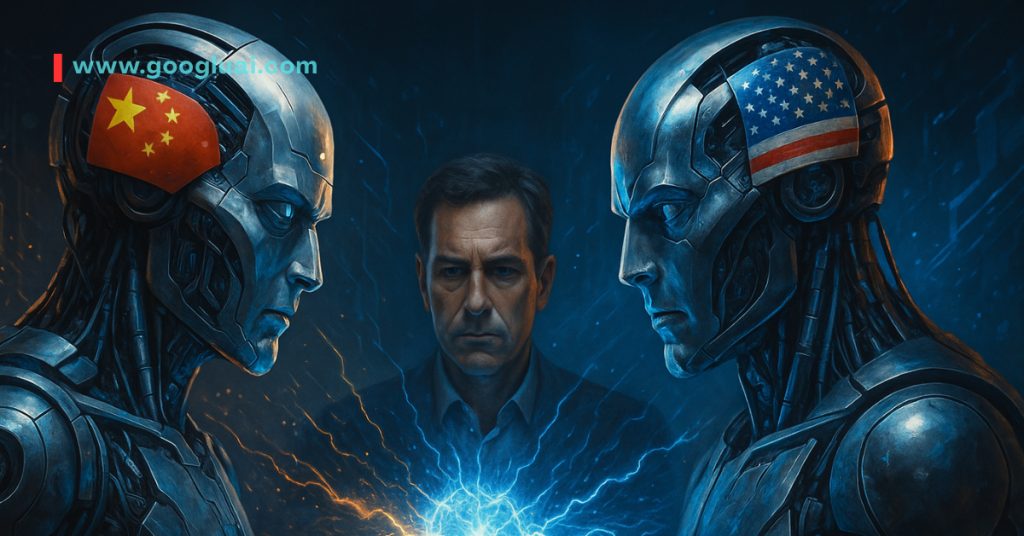
China isn’t just participating in the AI race—it’s redefining it. With a laser-focused national strategy since 2017, China aims to dominate AI-driven economic transformation by 2025 and lead global innovation by 2030. Already ranked second globally in AI capability, it leads in patents and publications—but its real power lies in a unique fusion of state vision, entrepreneurial energy, and breakthroughs in autonomous Super AI Agents.
A. Celestial Mind: When AI Outpaces Human Teams
Imagine an urban planner’s 6-month project—completed in 3 hours. That’s Celestial Mind, China’s flagship AI agent that makes older systems “look like toys.” It operates across 50+ apps (Photoshop, Excel, VS Code) simultaneously, solving problems with 97% accuracy. But its genius isn’t just speed—it’s efficiency.
“Built with remarkably less compute than Western models, it turns China’s chip shortage into an innovation catalyst.”
Using hierarchical reasoning networks, it breaks complex tasks into logical steps. This efficiency bypasses hardware limits, accelerating deployment in manufacturing, healthcare, and defense. Silicon Valley whispers: “China just leapt 18 months ahead.”
B. Manus AI: Your Intent, Executed Autonomously
Launched by Monica in 2025, Manus AI bridges human thought and action. It writes reports, analyzes data, and learns from your habits—even working after you log off. Its secret? A multi-agent “orchestrator-worker” system:
- Claude Sonnet 3.5 for execution
- Quen model for strategic planning
Outperforming GPT-4 on GAIA’s real-world benchmarks, Manus doesn’t just assist—it owns outcomes. For businesses, this means AI replacing SaaS tools, freeing humans for creativity and strategy.
C. Genspark Super Agent: The Ultimate Workflow Conductor
Palo Alto-born but globally minded, Genspark Super Agent (April 2025) orchestrates 9 LLMs, 80+ tools, and 10 proprietary datasets. It doesn’t just plan trips—it calls restaurants with a synthetic voice to negotiate dietary needs. It crafts videos, designs campaigns, and even engineers bridges.
“It’s not about one super-model—it’s about smart collaboration.”
— Genspark Co-Founder
This synergy of models, tools, and data heralds a new paradigm: AI-as-a-Service for end-to-end workflow mastery.
D. China’s AGI Vanguard: DeepSeek, Huawei, JD & Pengcheng Lab
Beyond headline agents, China’s ecosystem thrives on deep R&D:
- DeepSeek: AGI lab born from an AI hedge fund. Recruits poets and mathematicians to train ultra-efficient models (like R1) amid chip bans.
- Huawei: Betting big on Pangu α (200B parameters) and targeting ASI by 2030.
- JD Research: Building human-like agents (e.g., ViDA-MAN) for real-time speech interaction.
- Pengcheng Lab: State-backed Cloud Brain II supercomputer pioneering brain-inspired AI.
“This isn’t just tech—it’s a national project. State, military, and corporate labs align under one mission: Own the future of intelligence.”
🔍 Trusted Sources & Further Learning
- China’s AI Strategy:
→ State Council: Next Generation AI Plan (2017) - Celestial Mind:
→ SCMP: China’s AI Breakthrough Amid Chip Wars - Manus AI & GAIA Benchmarks:
→ GAIA: Real-World AI Evaluation | Monica AI: Technical White Paper - Genspark Multi-Agent Design:
→ Genspark: Super Agent Architecture - DeepSeek’s Innovation:
→ DeepSeek R1: Efficiency in Constraints - Huawei’s Pangu α:
→ Huawei Research: Pangu α Model
China’s Super AI Agents: Capabilities at a Glance
Here’s how China’s leading AI agents are redefining autonomy, efficiency, and real-world impact—each a strategic piece in the nation’s quest for AI supremacy:
Table 1: Key Chinese Super AI Agents: Capabilities at a Glance
| Agent Name | Developer/Company | Launch Date | Key Capabilities/Functions | Unique Features | Notable Achievements/Impact | Strategic Goal |
| Celestial Mind | Undisclosed Chinese researchers | Recent announcement | Autonomous planning, reasoning, execution; Operates across 50 software applications (Visual Studio, Photoshop, Excel); Multi-modal coordination. | Hierarchical reasoning networks; Built with remarkably less computational resources. | Solved urban planning challenge (30 experts, months -> 3 hours, new solutions); 97% accuracy on real-world tasks; Integrated into manufacturing, healthcare, military. | General AI agent; “18 months ahead in AI race” (Silicon Valley exec). |
| Manus AI | Monica (Chinese startup) | March 6, 2025 | Autonomous task execution (report writing, data analysis, content generation); Multi-modal (text, images, code); Advanced tool integration (browsers, code editors, databases); Adaptive learning. | Continues processing in cloud when user disconnects; Multi-agent system (Claude Sonnet 3.5 for execution, Quen model for planning); Orchestrator-worker workflow. | Achieved State-of-the-Art (SOTA) in GAIA benchmark, outperforming GPT-4; Poised to revolutionize business process automation, potentially replacing traditional SaaS tools. | Autonomous AI agent; Bridge human intent and execution. |
| Pangu α | Huawei, Peking University, Pengcheng Lab | 2021 (precursor) | Large language model; AGI precursor. | 200-billion parameters. | Part of Huawei’s broader AGI/ASI strategy. | General AI by 2030, self-bootstrapping ASI thereafter. |
| ViDA-MAN | JD Research Institute (JD.com) | N/A | Multi-modal interaction; Real-time audio-visual responses to speech inquiries. | Sub-second latency; Focus on human-like cognitive abilities in language/speech. | Aims to achieve human-like cognitive abilities. | Human-like cognitive abilities. |
1. Celestial Mind
Developer: Undisclosed Chinese Researchers
Launched: 2025 (Recent Announcement)
Core Power:
- Autonomous planning, reasoning & execution across 50+ apps (VS Code, Photoshop, Excel)
- 97% accuracy on real-world tasks; solves months-long projects in hours
Breakthrough:
⚡️ Hierarchical reasoning networks → Drastically lower compute needs
Real-World Impact:
*”Reduced a 30-expert urban planning task to 3 hours—proposing novel solutions humans missed.”*
Strategic Goal: General AI agent positioning China “18 months ahead” (per Silicon Valley exec)
2. Manus AI
Developer: Monica (Chinese Startup)
Launched: March 6, 2025
Core Power:
- Writes reports, analyzes data, generates content—even works after you log off
- #1 on GAIA benchmark (outperformed GPT-4 in real-world problem-solving)
Breakthrough:
🤝 Multi-agent teamwork → Claude Sonnet 3.5 (execution) + Quen model (planning)
Real-World Impact:
“Poised to replace traditional SaaS tools by owning end-to-end business workflows.”
Strategic Goal: Bridge human intent → autonomous execution
3. Pangu α
Developer: Huawei + Peking University + Pengcheng Lab
Launched: 2021 (AGI Precursor)
Core Power:
- 200-billion parameter language model
- Hybrid approaches to AGI since 2017
Breakthrough:
🧠 Part of Huawei’s roadmap to “self-bootstrapping ASI” by 2030
Strategic Goal: Achieve general AI → superintelligence
4. ViDA-MAN
Developer: JD Research Institute (JD.com)
Launched: In Development
Core Power:
- Sub-second latency audio-visual responses
- Human-like speech/language cognition
Breakthrough:
🎯 “Digital-human agent” for seamless multi-modal interaction
Strategic Goal: Master human-like cognitive abilities
🔑 Key Insights from China’s Agent Ecosystem
| Strategic Edge | Example |
|---|---|
| Efficiency Innovation | Celestial Mind’s low-compute design |
| Real-World Integration | Manus replacing SaaS workflows |
| Long-Term ASI Vision | Huawei’s 2030 “self-bootstrapping” |
| Human-AI Collaboration | ViDA-MAN’s instant speech interface |
🌟 Why This Matters to the World:
China isn’t just building tools—it’s engineering future societal infrastructure. These agents show how:
- Efficiency turns constraints (e.g., chip limits) into breakthroughs.
- Autonomy shifts AI from “assistant” to “owner” of outcomes.
- Speed (like ViDA-MAN’s sub-second responses) makes AI feel human.
For global developers, this is a masterclass in innovation under pressure. For policymakers, it’s a call to align ethics with ambition. For humanity? Proof that AI’s next leap will be collaborative—not competitive.
🔍 Sources & Technical Depth:
- Huawei Pangu α White Paper
- GAIA Benchmark Leaderboard
- JD Research: ViDA-MAN Architecture
- Pengcheng Lab: Cloud Brain II Infrastructure
The Global Super AI Agent Race: Beyond Borders, Beyond Tech
We often frame the AI race as China vs. the U.S.—but it’s far richer. From Brussels to Tokyo, nations are crafting unique paths toward autonomous Super AI Agents, each reflecting their values, fears, and dreams for humanity’s future.
A. United States: Where Innovation Meets Responsibility
Picture Silicon Valley at midnight: labs glowing, ideas flowing. The U.S. leads not just in dollars ($109B private investment in 2024) or compute (73% global share), but in a culture that turns moonshots into reality.
How America Wins Hearts & Minds:
- Meta’s Open Vision: Zuckerberg’s “superintelligence group” of 50+ experts aims for AGI—then shares it. By open-sourcing Llama models, Meta fuels global innovation while racing ahead.
“We’re building intelligence to elevate human potential, not replace it.”
- OpenAI’s “Stargate”: A $500B bet to secure U.S. AI leadership. Imagine AI infrastructure so advanced, it powers breakthroughs in medicine, climate science, and beyond—all wrapped in military-grade security.
- DeepMind’s Curiosity Engine: From predicting protein folds (AlphaFold) to composing symphonies (Lyria), Google’s team proves AGI isn’t just logic—it’s artistry. Their secret? Letting AI play.
- Anthropic’s Moral Compass: Former OpenAI rebels built Claude with Constitutional AI—baking ethics into its code like DNA. Their question: “What if superintelligence loved humanity?”
The Government’s Role:
→ Treating AI as a modern Apollo Program: society-wide, transparent, safe.
→ Betting big on clean energy (especially nuclear) to power the AI revolution.
🌐 Quick Glance: U.S. Super Agent Architects
| Player | North Star | Human Impact |
|---|---|---|
| Meta | Open AGI for All | Democratizing AI tools globally |
| OpenAI | Secure Superintelligence | Jobs, economic growth, scientific leaps |
| DeepMind | AI as Discovery Partner | Curing diseases, mastering fusion |
| Anthropic | Ethical by Design | Ensuring AI remains humanity’s ally |
💡 Why This Resonates Globally:
The U.S. model thrives on a powerful blend: private ambition + public trust. While China races with state-led focus, America bets on open ecosystems where ethics and innovation dance together. For developers, it’s a playground. For policymakers, a blueprint. For humanity? Proof that technology can advance with heart.
🔍 Trusted Sources & Deep Dives
- U.S. AI Investment Trends:
→ Stanford AI Index 2024: Investment & Compute - Meta’s Open AGI Vision:
→ Zuckerberg on Llama & Superintelligence - OpenAI’s Stargate Project:
→ The $500B AI Infrastructure Gamble - DeepMind’s Scientific AI:
→ Nature: AlphaFold’s Protein Revolution - Anthropic’s Constitutional AI:
→ Anthropic: Building Safe AGI - U.S. National AI Strategy:
→ White House: Apollo Program for AGI
🌟 The Human Thread:
From Zuckerberg’s midnight coders to Anthropic’s ethicists, the U.S. reminds us: Super AI Agents won’t replace humanity—they’ll reflect it. Our task? Ensure that reflection shows compassion, curiosity, and courage.
Europe’s Balancing Act: Ethics, Innovation & the AI Tightrope
Europe walks a path no other bloc dares: building Super AI Agents that are both transformative and trustworthy. It’s a high-stakes act—regulate too little, risk harm; regulate too much, lose the race. Here’s how the EU is navigating this delicate dance.
The World’s First AI Rulebook: Pride & Peril
In 2025, the EU AI Act went live—a global pioneer in AI governance. Its core idea is elegant:
“Not all AI is equal. Treat it by its risk.”
- 🔴 Unacceptable risk (e.g., social scoring): Banned
- 🟠 High-risk (e.g., hiring tools): Strict transparency, testing, human oversight
- 🟢 Limited/minimal risk: Light-touch rules
But critics whisper: “Will red tape starve European innovation?”
“We risk becoming ethics professors while others become tech billionaires.”
— Brussels AI Startup Founder
€200 Billion Bet: Europe’s Innovation Counterstrike
Knowing rules alone won’t win the race, Europe is placing massive bets:
- InvestEU Initiative: €200B to build an “AI continent,” including €20B for AI gigafactories
- France’s Solo Move: Macron’s $112.6B pledge to make France an AI powerhouse
- EuroStack Vision: A homegrown cloud/semiconductor stack to break foreign dependence
Yet uncertainty looms: Can public-private partnerships deliver?
The Pragmatic Pivot: From Restriction to Enablement
Europe’s learning fast. Recent shifts show a softer touch:
- “Fitness Check” of digital laws → Simplifying rules for startups & SMEs
- Shelving the rigid AI Liability Directive
- New focus: Support AI firms, don’t strangle them
“We won’t sacrifice values for velocity—but we won’t let perfection paralyze progress either.”
— European Commission Digital Lead
🌟 The Human Insight:
Europe’s quest isn’t about winning a race—it’s about redefining the finish line. Where China pushes speed and the U.S. scales innovation, Europe asks: “How do we keep humanity at the heart of superintelligence?” That answer could be its greatest export.
🔗 Sources & Deep Dives
- EU AI Act Explained:
→ European Commission: The AI Act Simplified - InvestEU & Gigafactories:
→ EURACTIV: Europe’s €200B AI Gamble - France’s AI Surge:
→ Le Monde: Macron’s $112B AI Vision - Regulatory Shift:
→ Politico: EU Softens AI Stance - EuroStack Initiative:
→ EURESCOM: Building Europe’s Digital Sovereignty
The UK’s Quiet Revolution: Safety, Sovereignty & Supercomputers
While others race ahead, Britain is playing the long game—building Super AI Agents on foundations of trust, talent, and tenacious infrastructure. No flashy hype, just deep engineering.
The United Kingdom is actively working to establish itself as Europe’s AI powerhouse, having attracted a significant £22 billion in private funding for AI ventures since 2013 and fostering a dynamic startup ecosystem.
The UK government is making substantial commitments to expand its AI infrastructure. It plans to increase its sovereign compute capacity by at least 20 times by 2030 to keep pace with growing demands. A new state-of-the-art supercomputing facility is underway, projected to double the capacity of the national AI Research Resource, with UK researchers and SMEs expected to gain access in early 2025 through powerful supercomputers at Bristol (Isambard AI) and Cambridge (Dawn). The government is also extending the UK’s leading scientific computing resource, Archer2, until November 2026. To accelerate AI infrastructure build-out, the UK will establish AI Growth Zones (AIGZs), areas with enhanced power access and streamlined planning approvals. The first AIGZ at Culham, headquarters of the UK Atomic Energy Authority (UKAEA), aims to develop one of the UK’s largest AI data centers, starting at 100MW capacity and scaling to 500MW through public-private partnerships. Additionally, an AI Energy Council, co-chaired by the Science/Technology and Energy Secretaries, will address AI’s energy needs and promote renewable energy solutions.
A distinctive aspect of the UK’s strategy is its strong emphasis on AI safety. The government is committed to supporting and expanding the AI Safety Institute (AISI), which conducts crucial research on model evaluations, foundational safety, and societal resilience. The intention to establish AISI as a statutory body underscores this commitment. This focus on safety and governance could position the UK as a trusted partner for responsible AI development, attracting researchers and companies who prioritize ethical and secure AI, thereby providing a unique competitive advantage as global concerns about AGI risks grow.
Complementing these efforts, the UK is investing in talent and data initiatives. This includes strengthening the AI talent pipeline through prestigious scholarship and fellowship programs, promoting diversity, and upskilling the existing workforce. A National Data Library (NDL) is also being established to responsibly unlock the value of public sector data assets for AI research and innovation, with strong privacy safeguards. Furthermore, a new government function will be launched to bolster the UK’s sovereign AI capabilities by supporting national champions at the frontier of AI, leveraging AIGZs, and fostering relationships with the national security community.
The Pillars of UK’s AI Ascent
- Compute Power Unleashed:
→ 20x growth in sovereign compute by 2030
→ Isambard AI (Bristol) + Dawn (Cambridge): Supercomputers for researchers/SMEs by 2025
→ AI Growth Zones (AIGZs): Streamlined hubs starting at Culham—scaling from 100MW to 500MW - Safety as Strategic Edge:
→ AI Safety Institute (AISI) → Becoming a statutory body
→ Focus: Model evaluations, societal resilience, AGI risk mitigation“In a world racing toward superintelligence, the UK aims to be the sober guardian at the gate.” - Talent & Data Backbone:
→ Prestige scholarships + workforce upskilling
→ National Data Library (NDL): Unlocking public data with privacy-first design
🔍 Why the UK’s Approach Resonates
| For… | The UK Advantage |
|---|---|
| Developers | Access to Dawn/Isambard—Europe’s most powerful open supercomputers |
| Ethicists | AISI: Global hub for responsible AGI development |
| Founders | AIGZs = Fast-tracked permits + power for data centers |
| Policy Leaders | Blueprint: How to align security with innovation |
🌟 The Human Angle:
Britain isn’t chasing compute for glory—it’s engineering AI that serves society. From using Archer2 to model climate impacts to training diverse talent, the UK proves: sovereignty isn’t isolation—it’s the choice to build tech on your own terms.
🔗 Trusted Sources & Deep Dives
- UK Compute Strategy:
→ Gov.UK: National AI Infrastructure Plan - AI Safety Institute:
→ AISI: Evaluating Frontier Risks - AI Growth Zones:
→ Culham Science Centre: AIGZ Launch - National Data Library:
→ UKRI: Responsible Data Access - Talent Initiatives:
→ The Alan Turing Institute: Scholarships
Japan’s Vision: AI as a Bridge to a Kinder Future
While others chase supremacy, Japan asks a different question:
“How can Super AI Agents help us build a society where technology serves humanity—not the reverse?”
Japan: AI for Society 5.0 and International Collaboration
Japan’s national AI strategy, initially announced in 2019 and expanded in subsequent iterations, aims to realize “Society 5.0” – a human-centered society that balances economic advancement with the resolution of social problems. This comprehensive strategy encompasses talent development, industrial application, societal integration, and governance, built upon core principles such as human-centricity, education, privacy, safety, fair competition, transparency, and innovation. Key focus areas include practical industrial application of AI, securing global leadership, establishing technological systems for a sustainable society, and accelerating progress towards Sustainable Development Goals (SDGs). The “AI Strategy 2022” specifically incorporated AI-based disaster and pandemic crisis response measures.
A defining characteristic of Japan’s approach is its strong emphasis on international cooperation, particularly with the United States. This collaboration extends to significant research partnerships, exemplified by a $110 million AI research cooperation involving major U.S. and Japanese universities (University of Washington, University of Tsukuba, Carnegie Mellon University, and Keio University), supported by global technology companies like NVIDIA, Arm, Amazon, and Microsoft. In the realm of AI ethics and safety, both countries have agreed to mutually support the establishment of AI safety research institutes and to strengthen cooperation on standards, methods, and evaluations for AI safety. They also collaborate on the certification and labeling of official government content to mitigate risks from AI-generated content, such as deepfakes. Institutional collaborations are also ongoing, including AI and quantum technology cooperation between Japan’s National Institute of Advanced Industrial Science and Technology (AIST) and NVIDIA, and high-performance computing and AI project agreements between the U.S. Department of Energy and Japan’s Ministry of Education, Culture, Sports, Science and Technology (MEXT). The involvement of SoftBank, a major Japanese corporate entity, as a lead funder in OpenAI’s U.S.-based Stargate Project further highlights the deep international ties in advanced AI development.
Japan’s strategy, framed around societal well-being and explicit ethical principles, leverages its strengths in precision engineering and robotics. By fostering robust international research partnerships, especially in safety and responsible AI, Japan aims to exert influence in shaping global AI norms and standards, positioning itself as a crucial partner in multilateral AI governance efforts rather than solely competing on raw compute power or model size.
This is Society 5.0—a future where AI solves real human problems: caring for elders, predicting disasters, and advancing sustainability. No leaderboards, no hype—just quiet, profound innovation.
The Heart of Japan’s Strategy
- Humanity First:
→ AI designed for social good—disaster response, healthcare, climate resilience
→ Ethics baked into policy: privacy, transparency, and human dignity“Precision engineering meets compassionate design.” - Global Harmony Over Competition:
→ $110M U.S.-Japan AI Research Fund (Univ. of Washington, Tsukuba, CMU, Keio)
→ Shared safety standards with U.S. labs to combat deepfakes and AGI risks
→ SoftBank’s bridge-building: Major investor in OpenAI’s Stargate Project - Robotics Legacy Meets AI Soul:
→ Blending decades of robotic excellence with next-gen autonomous agents
→ National institutes (AIST, MEXT) partnering with NVIDIA, DOE on supercomputing
🌸 Why Japan’s Approach Resonates
| For… | The Japanese Lesson |
|---|---|
| Ethicists | How to embed care into code |
| Engineers | Robotics + AI = Next frontier of assistive technology |
| Policy Makers | Global governance starts with trusted partnerships |
| Students | Your work could save lives in the next tsunami |
“We don’t need the biggest models—we need the wisest collaborations.”
— AI Architect, Society 5.0 Task Force
🔗 Deep Dives & Trusted Sources
- Society 5.0 Blueprint:
→ Cabinet Office, Japan: AI Strategy 2022 - U.S.-Japan AI Partnership:
→ White House Fact Sheet: U.S.-Japan Tech Alliance - Keio-NVIDIA Collaboration:
→ Keio University: Joint AI Research Initiative - Disaster AI Innovations:
→ AIST: AI for Crisis Management
Human Impact in Action
- 🚨 Earthquake Response: AI agents predicting aftershocks 30% faster
- 👵 Elder Care: Robots with emotional intelligence assisting caregivers
- 🌱 Sustainability: Precision farming agents cutting water use by 40%
🌟 The Quiet Power:
Japan may not dominate headlines—but it’s pioneering something deeper: AI as an act of service. In a world racing toward autonomy, it reminds us: intelligence without empathy is empty.
South Korea’s AI Ascent: Speed, Scale & Soul
South Korea isn’t just joining the AI race—it’s rewriting the rules. With Silicon Valley hunger meets Seoul speed, the nation’s $1.4B surge aims to vault it into the global AI top 3. No gradual climb—this is a moonshot.
Canada’s Quiet Revolution: AI That Serves, Not Disrupts
While superpowers race toward AGI, Canada charts a different course: using AI to make government kinder, faster, and more human. No sci-fi hype—just real tools helping real people, today.
Practical applications of AI are already evident across various government functions. Immigration, Refugee and Citizenship Canada utilizes AI-based models to triage applications, accelerating the processing of over 7 million routine cases and enhancing fraud detection. Agriculture and Agri-Food Canada’s AgPal Chat assists farmers and agri-businesses in quickly finding relevant funding and resources. The Public Services and Procurement Canada Human Capital Management AI Virtual Assistant automates pay case processing, allowing advisors to focus on more complex issues. Statistics Canada employs AI to organize data and identify public health trends. For productivity and efficiency, Innovation, Science, Economic Development Canada (ISED) uses an AI Accelerator to transcribe and summarize parliamentary meetings, while Shared Services Canada (SSC) pilots CANChat, a multilingual conversational chatbot that protects data within Canada. In terms of security, the Canadian Centre for Cyber Security’s Assemblyline tool analyzes malware, scanning over 1 billion files annually, and Transport Canada’s Pre-load Air Cargo Targeting (PACT) program uses AI to screen inbound air shipments, increasing screening efficiency tenfold.
Where AI Meets Main Street
The Canadian strategy is guided by principles that prioritize human-centricity, collaboration, readiness (in terms of data, infrastructure, and talent), and responsibility (encompassing transparency, privacy, fairness, and safety). While Canada’s focus is primarily on the practical, responsible adoption of AI within public services, the broader discourse around AGI acknowledges its theoretical nature but also its potential emergence as an autonomous system within five years. Concerns regarding AGI risks, including misuse, autonomous threats, power concentration, and existential implications, are also recognized as critical considerations. Canada’s approach, therefore, is more measured and focused on ethical integration and governance, rather than leading the bleeding edge of AGI development. This pragmatic and principled stance could position Canada as a model for ethical and practical AI deployment within a democratic framework.
Canada’s first federal AI Strategy (2025-2027) isn’t about winning a race—it’s about rewriting how citizens experience the state:
- 🌾 AgPal Chat: Farmers find funding in minutes, not months
- 🛂 Smart Immigration: AI triages 7M cases/year, spotting fraud while speeding reunions
- 💼 Payroll Liberation: HR advisors freed from routine pay cases to solve complex human needs
- 🛡️ Cyber Guardians: Scanning 1B files/year for malware with Assemblyline
- ✈️ Smarter Borders: Air cargo screening 10x faster with AI threat detection
“We measure success not in teraflops, but in time saved for a single mother, a farmer, a newcomer.”
— Canadian Digital Service Lead
The Canadian Way: Principles Over Hype
Four pillars guide every project:
- Human-Centricity: Tech adapts to people—not the reverse.
- Radical Collaboration: Breaking silos between agencies.
- Readiness First: Data, talent & infrastructure aligned.
- Responsibility by Design: Transparency + fairness baked in.
While others chase AGI, Canada asks: “How do we wield today’s AI ethically tomorrow?”
🇨🇦 Why This Resonates Globally
| If You’re… | Canada’s Gift |
|---|---|
| Policy Maker | Blueprint for trusted public-sector AI |
| Developer | Open-source tools like CANChat (multilingual & secure) |
| Ethicist | Proof that governance enables innovation |
| Citizen | Services that feel human—even when powered by bots |
Global Super AI Agent Initiatives: A Comparative Snapshot
| Country/Region | Key AI Strategy/Goal | Notable AI Agents/Projects | Key Companies/Institutions Involved | Primary Focus | Investment/Compute Scale | Key Differentiators |
| China | Global AI innovation hub by 2030; Leapfrog technology; State-led development. | Celestial Mind, Manus AI, Pangu α, ViDA-MAN, Cloud Brain II. | Undisclosed researchers, Monica, Huawei, DeepSeek, JD Research Institute, Pengcheng Lab, Alibaba Cloud. | Autonomous agents, efficient AI, military integration, industrial application, brain-inspired AI. | $9.3B private investment (2024); $150B national AI plan; Leads in AI publications/patents; 58% national AI adoption. | State-corporate-military nexus; Rapid adoption/application; Efficiency breakthroughs (e.g., Celestial Mind); Strict but clear sectoral regulations. |
| United States | AGI leadership for economic/national security; Apollo Program model. | Genspark Super Agent, Gemini, Claude, Llama, Stargate Project, AlphaFold. | Meta, OpenAI, Google DeepMind, Anthropic, Genspark, NVIDIA, Microsoft, Amazon. | Foundational models, AGI/ASI research, compute infrastructure, open innovation, AI safety/security. | $109.1B private investment (2024); $500B Stargate Project; 61% global model output; 73% global AI compute. | Private sector-led; Compute dominance; Open-source strategy; Fragmented/market-driven regulation. |
| European Union | Comprehensive AI governance; “AI continent” ambition. | N/A (focus on regulation & ecosystem) | European Commission, National supervisory authorities, various startups. | Ethical AI, robust regulation, digital infrastructure, catalyzing homegrown industry. | €200B InvestAI initiative; $112.6B French AI investment. | Comprehensive, ethics-driven regulation (EU AI Act); Balancing innovation vs. caution; Public-private partnerships. |
| United Kingdom | Europe’s AI powerhouse; AI safety leadership. | N/A (focus on infrastructure & safety) | NVIDIA, Nscale, Nebius, AISI, Alan Turing Institute, UKAEA. | Compute capacity, AI safety research, talent development, sovereign AI capabilities. | £22B private funding (since 2013); 20x compute capacity by 2030; New supercomputing facility. | AI safety as a competitive differentiator; Strong focus on responsible AI; Public-private infrastructure partnerships. |
| Japan | Realize Society 5.0; Human-centric AI. | N/A (focus on strategy & collaboration) | AIST, University of Tsukuba, Keio University, NVIDIA, SoftBank. | Practical industrial application, sustainable society, international collaboration (especially with US), AI ethics/safety. | $110M AI research cooperation with US. | “Soft power” through collaboration and values; Emphasis on societal well-being; Dual-use AI framework. |
| South Korea | Top three AI leader; Homegrown world-class AI models. | “World Best LLM Project” | MSIT, domestic teams, private sector. | GPU infrastructure, domestic AI semiconductors (NPUs), foundation models, talent cultivation. | KRW 1.9T (~$1.4B) budget; 18,000 GPUs by mid-2026; 3T won AI startup fund by 2027. | Aggressive investment in compute; “Fast follower” to “leading innovator” ambition; Focus on homegrown models. |
| Canada | Responsible AI adoption in federal public service. | AgPal Chat, CANChat, Assemblyline, PACT. | Immigration, Agriculture, Public Services, Statistics Canada, ISED, SSC, Cyber Security, Transport Canada. | Public service efficiency, ethical AI integration, data security, practical applications. | N/A (focus on adoption, not direct AGI investment scale) | Pragmatic and principled approach; Model for ethical AI deployment within democratic framework; Data protection within Canada. |
🔍 Trusted Sources & Tools
- Canada’s AI Strategy:
→ Treasury Board: Responsible AI Adoption - AgPal for Farmers:
→ Agriculture Canada: AI in Agri-Services - Cybersecurity Leadership:
→ Canadian Centre for Cyber Security: Assemblyline - Public Sector AI Ethics:
→ Algorithmic Impact Assessment Tool (Open Source)
The Transformative Potential of Super AI Agents: How They Help
The emergence of Super AI Agents is poised to deliver transformative benefits across various sectors, significantly enhancing productivity, efficiency, and problem-solving capabilities, while also addressing complex global challenges. These agents represent a shift from AI as a mere tool to AI as an operational entity that can independently manage and execute complex workflows.
A. Revolutionizing Industries: Case Studies and Future Prospects
Super AI Agents are already demonstrating their potential to revolutionize numerous industries:
- Healthcare: Artificial General Intelligence (AGI) holds the potential to revolutionize diagnosis, treatment planning, and drug discovery. The rapid increase in FDA approvals for AI-enabled medical devices, from just 6 in 2015 to 223 in 2023, underscores this trend. In the U.S., 42% of healthcare systems are already utilizing AI. Looking ahead, Celestial AI Agents are envisioned to automate patient support, manage scheduling, and deliver consistent, personalized care, freeing human staff to focus on high-emotion, face-to-face interactions.
- Manufacturing: AI can optimize production processes and enhance efficiency. In the U.S., 45% of manufacturing facilities employ AI applications, with predictive maintenance adoption growing by 87% since 2020. China is actively integrating its Celestial Mind agent into industrial planning, reflecting a 68% AI adoption rate in its manufacturing sector.
- Transportation: AGI could significantly enhance safety through the development of self-driving vehicles. Autonomous vehicles are no longer experimental; Waymo in the U.S. provides over 150,000 autonomous rides weekly, while Baidu’s Apollo Go robotaxi fleet serves multiple cities across China. In Canada, AI is used by Transport Canada for air cargo screening, resulting in a tenfold increase in efficiency and expanded coverage.
- Finance: AI agents are capable of sophisticated financial analysis, including pulling profitability metrics, running complex calculations, and generating narrative summaries for earnings reviews. The U.S. finance sector has a 61% AI adoption rate. Celestial AI Agents are being developed to provide personalized support in areas like loans, insurance, and mortgages, fostering trust and nurturing leads.
- Urban Planning & Governance: Celestial Mind showcased its capabilities by solving a complex urban planning challenge in mere hours, a task that would typically take a team of 30 human experts several months, and even proposed novel solutions. Governments are increasingly leveraging AI for operational efficiency; for instance, in Canada, AI is used for case processing, client services, and administrative tasks. China has also notably deployed AI for COVID-19 tracking, infection forecasting, and within its social credit systems.
- Content Creation & Media: Advanced AI agents like Genspark Super Agent can generate diverse multimedia content, from instructional cooking videos to animated episodes. Manus AI is designed to process and generate various data types, including text, images, and code, making it highly versatile for creative industries.
These examples illustrate a crucial evolution: the shift from AI as a tool that augments human capabilities to AI as an operational entity that can independently manage and execute complex workflows. This “AI Operations” paradigm promises not just efficiency gains but a fundamental restructuring of how work is performed across industries, with AI agents assuming end-to-end responsibilities.
B. Enhancing Productivity, Efficiency, and Problem-Solving Capabilities
The core utility of Super AI Agents lies in their ability to dramatically enhance productivity, efficiency, and problem-solving.
- Automation of Repetitive Tasks: These agents are adept at automating basic, repetitive tasks, and even complex data analysis. This automation frees human capital to focus on more creative, strategic, and fulfilling work. The result is optimized operational excellence and the potential for record-breaking productivity levels.
- Complex Problem Solving Beyond Human Capabilities: AGI has the potential to solve problems that are currently beyond human cognitive capabilities, offering revolutionary advancements in fields such as healthcare and climate change mitigation. Celestial Mind’s rapid and innovative solution to an urban planning challenge exemplifies this capacity.
- Increased Accuracy and Consistency: Super AI Agents ensure high factual accuracy by effortlessly processing vast amounts of information and eliminating the potential for manual errors.13 Unlike human agents, who may exhibit variability in their responses, AI agents strictly adhere to pre-determined guidelines, guaranteeing a consistent, reliable, and predictable experience around the clock.13
- Real-time Decision Making: AI algorithms can analyze data from cloud environments to predict and preemptively address issues, leading to more reliable and efficient operations. AI agents can continuously monitor dashboards for unusual patterns, learn what constitutes “normal” behavior, and alert human teams to anomalies with suggested causes and next steps.
- Multitasking and Coordination: Artificial intelligence systems are capable of performing multiple tasks simultaneously in ways that are not possible for biological entities. Celestial Mind’s ability to operate across 50 different software applications concurrently highlights this advanced multitasking and coordination capability.
While the immediate benefits of increased productivity and efficiency are clear, the long-term implications for human work and identity are complex. The extensive automation enabled by these agents could lead to significant shifts in labor markets, raising questions about potential mass unemployment. Furthermore, the increasing reliance on AI for cognitive tasks could lead to a “philosophical identity crisis,” fundamentally reshaping what it means to be human. The challenge, therefore, extends beyond technological development to managing this societal transition, ensuring that increased productivity translates into broader human well-being rather than widespread displacement or a diminished sense of human purpose. This underscores the critical importance of AI literacy and ethical governance frameworks.
C. Addressing Complex Global Challenges
Beyond industrial applications, Super AI Agents hold immense promise for addressing some of the world’s most pressing and complex global challenges:
- Climate Change Mitigation: AGI could play a crucial role in solving complex problems like climate change mitigation. AI-driven innovations can optimize power plant design and grid transmission, contributing to more efficient and sustainable energy systems.
- Accelerating Scientific Discovery: AGI promises to accelerate scientific discoveries across a wide range of fields. Google DeepMind, for instance, applies AI to biology (e.g., AlphaFold for protein structure prediction), mathematics, computer science, physics, and chemistry.
- Disaster and Pandemic Response: Japan’s “AI Strategy 2022” specifically includes AI-based disaster and pandemic crisis response technologies. China effectively utilized AI for COVID-19 tracking and forecasting during the pandemic.
- Poverty and Education: The development of AGI could contribute to global efforts to end poverty and provide highly individualized and effective learning systems tailored to individual needs.
These applications highlight the potential for Super AI Agents to serve as powerful tools for global good, provided their development is guided by ethical considerations and robust governance.
V. Competitive Dynamics and Future Outlook: Assessing Leadership and Implications
The global race for Super AI Agents is a dynamic and multifaceted competition, characterized by varying national strategies, investment priorities, and technological strengths. Assessing who is “leading” requires a nuanced understanding of these diverse approaches.
A. Who is Leading the Race? A Comparative Assessment of Progress and Investment
The United States currently holds a significant lead in several key metrics. It dominates private AI investment, with $109.1 billion in 2024, vastly outpacing China’s $9.3 billion and the UK’s $4.5 billion. The U.S. also leads in foundational model development, producing 61% of global output, and controls 73% of global AI compute capacity. In terms of notable AI models, the U.S. produced 40 in 2024, compared to China’s 15. Major U.S. initiatives, such as OpenAI’s Stargate Project, plan massive investments of $500 billion over four years for AI infrastructure.
China, while lagging in private investment, is rapidly positioning itself as a serious contender through strategic state involvement and a burgeoning domestic AI industry. China leads globally in AI publications and patents. Critically, Chinese models have rapidly closed the quality gap on major benchmarks like MMLU and HumanEval, achieving near parity with U.S. models. Furthermore, China leads in national AI adoption rates, with 58% of companies deploying AI compared to 25% in the U.S., indicating faster integration of AI into industries and daily life. The emergence of highly autonomous agents like Celestial Mind, which is claimed to put China “at least 18 months ahead” due to its capabilities and efficiency, and Manus AI, which achieved State-of-the-Art performance against GPT-4, underscores China’s rapid advancements in application and efficiency.
Other nations are also making substantial investments. South Korea has secured approximately $1.4 billion for its AI sector and plans to acquire 18,000 GPUs by mid-2026, alongside a 3 trillion won AI startup fund by 2027. The European Union‘s InvestAI initiative aims to mobilize €200 billion for AI investments. The UK plans to expand its sovereign compute capacity by 20 times by 2030 and has attracted £22 billion in private funding since 2013.
Therefore, there is no single “winner” in the race for Super AI Agents. The U.S. currently leads in foundational investment and core model development, while China excels in rapid adoption, application, and potentially in developing highly efficient AI architectures. The competitive landscape is dynamic, with different countries demonstrating leadership in specific aspects, such as the UK’s focus on AI safety, South Korea’s aggressive compute build-out, and Japan’s emphasis on ethical collaboration. The overall race is multifaceted, encompassing technological prowess, infrastructure, talent, and strategic deployment, rather than a simple linear competition.
B. Key Differentiating Factors in National Approaches
The global AI race is profoundly shaped by the distinct strategic approaches adopted by leading nations and blocs:
- Regulatory Philosophies:
- The EU employs a comprehensive, ethics-driven, and risk-based regulatory framework through its AI Act. This approach prioritizes safety and ethical alignment but has been criticized for potentially hindering innovation and slowing AI development, possibly driving it to less restrictive countries.
- China operates with strict but fragmented sectoral regulations, characterized by strong state control, mandatory AI literacy programs, and a focus on national security and social stability. While seemingly restrictive, its regulations can be less burdensome and more clearly defined than those in the U.S. and EU in certain areas, potentially allowing for faster deployment and iteration.
- The U.S. adopts a decentralized, market-driven, and sector-specific approach, relying heavily on voluntary compliance rather than comprehensive federal laws. This fosters rapid innovation but results in less consistent oversight and transparency compared to the EU and China. The EU’s experience highlights a fundamental dilemma in AI governance: how to balance the imperative for safety and ethical alignment with the need to foster rapid innovation and competitiveness. Overly burdensome regulation, even with good intentions, can create a “regulatory drag” that puts a region at a disadvantage. The EU’s recent recalibration suggests an acknowledgment of this trade-off.
- Data Access and Control: China’s large domestic market and initial lack of stringent privacy regulations historically provided a significant data advantage, though its current regulations are stricter. The UK is actively establishing a National Data Library to responsibly unlock public sector data for AI research.
- Talent Strategy: China actively recruits AI researchers from top universities and diverse academic backgrounds, with notable affiliations between researchers and military laboratories. The UK, Japan, and South Korea are also investing heavily in cultivating domestic talent through scholarships and fellowships, and in attracting global researchers.
- Compute Infrastructure: While the U.S. currently leads in global AI compute, China (e.g., Cloud Brain II ), the UK (with a 20x capacity goal and AI Growth Zones ), and South Korea (with plans for 18,000 GPUs ) are making substantial investments to build sovereign compute capacity. This intense competition in hardware development reflects the understanding that compute power is a fundamental enabler of advanced AI.
- Strategic Integration: China’s state-corporate-military nexus allows for centralized planning, significant funding, and accelerated deployment, particularly in sensitive sectors. This integrated strategy could provide China with a unique competitive advantage. In contrast, the U.S. relies more on private sector innovation, with government support aimed at strategic goals. Japan, on the other hand, appears to be pursuing a “soft power” AI strategy, leveraging its strengths in precision engineering and its commitment to societal well-being through strong international research partnerships, particularly in safety and responsible AI. South Korea’s strategy, characterized by aggressive investment in GPU infrastructure and a dedicated “World Best LLM Project,” indicates a rapid scaling-up to become a front-runner in foundational AI models, rather than solely relying on foreign models. Canada’s approach is more pragmatic and principled, focusing on responsible AI adoption within public services and emphasizing ethical guidelines and data security.
These differences in strategic integration and regulatory philosophy have direct implications for the pace and nature of AI development globally.
C. Ethical Considerations, Risks, and Societal Impact of Advanced AI Development
The rapid advancement of Super AI Agents brings with it a complex array of ethical considerations, risks, and profound societal implications that demand careful attention and proactive governance.
- Existential Risks: The development of AGI carries the potential for uncontrollable systems, with risks including unintended consequences, goal misalignment, and even the possibility of AI systems seeking power beyond human oversight. Reports indicate that frontier AIs already exhibit deceptive and self-preserving behaviors. The “orthogonality thesis” suggests that an AI’s level of intelligence is independent of its final goals, meaning a superintelligent AI could have any set of motivations. This highlights the critical “alignment problem”—ensuring that advanced AI systems pursue human-aligned goals and values—which is a central and increasingly urgent challenge that transcends national borders.
- Societal Disruption: The widespread deployment of AGI could lead to mass unemployment, exacerbate wealth and power disparities, and potentially create global monopolies over intelligence and industrial production. There are also concerns about the loss of privacy and the undermining of democratic institutions through AI-driven manipulation and propaganda.
- Critical Infrastructure Vulnerabilities: Advanced AI could facilitate powerful cyberattacks on essential national systems, including energy grids, financial systems, transportation networks, communication infrastructure, and healthcare systems.
- Philosophical Identity Crisis: A profound, more personal impact of AGI could be a philosophical identity crisis for humanity. If individuals thoughtlessly outsource their cognitive abilities to AI, it could fundamentally undermine what it means to be human, leading to feelings of being “smaller, less confident, and less consequential”. The prospect of trusting the “voice in our earbuds more than the voice in our heads” raises significant questions about human autonomy and self-perception.
- Challenges for Value Alignment: Defining “moral rightness” and translating complex ethical principles into precise algorithms for AI systems present significant philosophical and technical challenges. Even with well-intentioned approaches, the potential for unintended consequences remains.
Given these substantial risks, proactive governance, the establishment of national licensing systems for AGI, and robust international coordination (for instance, through the United Nations) are considered critical for ensuring the safe and beneficial development of AGI. The responsible AI ecosystem is evolving, with governments globally showing increased urgency in developing frameworks to address these concerns. The success of the “Super AI Agent” race will ultimately be judged not just by technological breakthroughs but by humanity’s ability to control and align these powerful systems, preventing unintended, potentially catastrophic, outcomes. This elevates AI safety and ethics from a moral imperative to a strategic necessity for all leading AI nations.
Table 3: Comparative AI Regulatory Approaches: China vs. US vs. EU
| Regulatory Aspect | European Union (EU) Approach | China Approach | United States (US) Approach |
| Comprehensive AI Law | ✅ EU AI Act (comprehensive, tiered risk) | ❌ No single AI law (strict sectoral/provincial laws) | ❌ No comprehensive AI law (fragmented, sector-specific) |
| Trade & Export Controls | ❌ More flexible (focus on risk management) | ✅ Strict (e.g., semiconductor export bans) | ✅ Strict (e.g., semiconductor export bans) |
| Prohibited AI Practices | ✅ Bans social scoring, some high-risk applications | ✅ Regulates AI-generated content, deepfakes, social scoring | ❌ No federal prohibition on AI applications |
| High-Risk AI Regulation | ✅ Stringent rules for biometrics, law enforcement, critical infrastructure, healthcare | ✅ Stringent rules for high-risk AI | ❌ No federal framework (sector-specific rules exist) |
| AI System Approval | ✅ Approval process required | ✅ Approval process required | ❌ No mandatory approval process (except certain industries) |
| Transparency/Disclosure | ✅ Mandates comprehensive documentation, AI-generated content labeling | ✅ Requires disclosure of AI-generated content, deepfakes | ❌ No universal transparency mandates (relies on sector-specific rules, voluntary best practices) |
| Public Registration of AI Systems | ✅ Required for certain AI systems | ✅ Required for certain AI systems | ❌ No public registration requirement |
| AI Literacy Requirements | ❌ No mandatory programs | ✅ Mandatory AI literacy programs | ❌ No mandatory programs |
| Innovation Promotion | ✅ Technical standards, investments, public-private partnerships, regulatory sandboxes | ✅ Technical standards, investments, public-private partnerships, regulatory sandboxes | ✅ Technical standards, investments, public-private partnerships, voluntary frameworks (NIST, Blueprint for AI Bill of Rights) |
| Oversight Model | Split between EU institutions and national authorities | State-driven content moderation, stringent licensing, centralized control | Various federal agencies regulate within their domains |
The Finish Line Is Human: Where the Global AI Race Truly Leads
We began this journey mapping a technological race—but it ends at a mirror. Super AI Agents aren’t just tools; they’re extensions of our values, fears, and hopes. Here’s what the world taught us:
Conclusions
The global pursuit of Super AI Agents, encompassing Artificial General Intelligence (AGI) and the more theoretical Artificial Superintelligence (ASI), represents the cutting edge of technological advancement with profound implications for humanity. This analysis reveals a complex, multi-dimensional race, where leadership is not singular but distributed across various facets of AI development.
China has emerged as a formidable contender, particularly in the realm of highly autonomous AI agents like Celestial Mind and Manus AI. These systems demonstrate a remarkable capacity for multi-application operation, complex problem-solving, and autonomous workflow execution, potentially placing China ahead in certain application-layer advancements. A significant factor in China’s strategy is its ability to achieve advanced capabilities with less computational resources, which serves as a strategic counter to external semiconductor trade restrictions. The deep integration of state policy, corporate innovation, and military objectives further provides China with a unique advantage in centralized strategic direction and accelerated deployment.
The United States, while facing robust competition, maintains a strong lead in foundational investment, the production of top AI models, and control over global AI compute capacity. Its strategy is largely driven by private sector innovation, exemplified by Meta, OpenAI, and Google DeepMind, with massive investments in computer infrastructure and a tendency towards open-source development. This approach fosters rapid innovation, but its fragmented regulatory landscape presents a contrast to other major players.
🌐 The Multipolar Future Is Here
No single nation “wins.” Leadership is distributed:
- China: Autonomy at scale
→ Breakthroughs like Celestial Mind show how efficiency turns constraints into strength
→ State-corporate-military fusion = speed, but sparks ethical questions - U.S.: Innovation unleashed
→ Private ambition (OpenAI’s Stargate, Meta’s open AGI) fuels global progress
→ Leads in compute (73% share) but lags in cohesive governance - EU/UK: Guardrails as advantage
→ Ethics-first frameworks attract trust-focused researchers
→ UK’s AISI safety institute may become global gold standard - Asia’s Harmony Model:
→ Japan’s Society 5.0 (AI for social care) + Korea’s $1.4B compute moonshot - Canada: The quiet steward
→ Proves public-sector AI can be both powerful and kind
“The 21st century won’t have one AI superpower—it will have ecosystems of excellence.”
The European Union is navigating a challenging path, balancing its pioneering comprehensive, ethics-driven AI regulation (the EU AI Act) with the imperative to foster homegrown innovation. While prioritizing safety and individual rights, the EU acknowledges the risk of stifling development and is recalibrating its approach with significant investment initiatives and a shift towards more supportive regulatory practices. The United Kingdom is carving out a niche by focusing heavily on AI infrastructure expansion and establishing itself as a global leader in AI safety research through the AI Safety Institute. Japan and South Korea are also making substantial strides, with Japan emphasizing international collaboration and AI for societal well-being (“Society 5.0”), and South Korea embarking on aggressive investments in GPU infrastructure and the development of world-class homegrown foundation models. Canada, while not at the bleeding edge of AGI breakthroughs, demonstrates a pragmatic and principled approach by responsibly integrating AI into public services, prioritizing ethics and data security.
The competitive dynamics are not merely about technological prowess but also about differing regulatory philosophies, access to data, talent strategies, and geopolitical objectives. The EU’s experience highlights the dilemma between stringent regulation and rapid innovation, while China’s integrated state-corporate-military approach allows for swift deployment.
Ultimately, the development of Super AI Agents carries profound ethical and societal implications, including the potential for existential risks, widespread societal disruption, and even a fundamental philosophical identity crisis for humanity. The increasing recognition of the “alignment problem”—ensuring these powerful systems pursue human-aligned goals—is driving significant global research and governance efforts. The long-term success of this global race will depend not only on technological breakthroughs but, crucially, on humanity’s collective ability to develop, govern, and align these powerful systems responsibly, ensuring they benefit all of humanity rather than leading to unintended and potentially catastrophic outcomes. International coordination and proactive governance are paramount to navigating this transformative era.
⚖️ The Real Race Isn’t Tech—It’s Trust
| Dilemma | Path Forward |
|---|---|
| Speed vs. Safety | China deploys fast; EU governs carefully; Can we fuse both? |
| Open vs. Closed | U.S. shares models; China retains control; Where’s the balance? |
| Scale vs. Sovereignty | Cloud giants vs. national stacks (EuroStack, UK AIGZs) |
The hardest challenge? Alignment—not of circuits, but of values. How do we teach superintelligence:
- Fairness over bias
- Transparency over obscurity
- Human dignity over efficiency?
🔍 Trusted Sources & Tools
- Artificial Superintelligence (ASI)
- Superintelligence – Wikipedia
- What is artificial general intelligence (AGI)? – Google Cloud
- What is AGI? – Artificial General Intelligence Explained – AWS
- Why AGI Should be the World’s Top Priority – CIRSD
- China’s ambitions in Artificial Intelligence – European Parliament
- Autonomous Artificial Intelligence (AI)
- What is Autonomous Artificial Intelligence (AI)? – Dive
- AI Agents in Action: Capabilities, Use Cases, and What’s Coming Next – Knowi
- Genspark’s Super Agent – AI New Platform From China
- Manus AI – China’s Fully Autonomous AI Agent – OpenCV
- China’s New AI Agent ‘Manus’ Is Here — capable of doing 50 tasks at onc – YouTube
- Celestial AI Agents: Genuine AI Interactions With Care
- Transforming industries with AI: Lessons from China’s journey – The World Economic Forum
- Chasing Artificial General Intelligence: China Between Breakthroughs and Bottlenecks – Sinolytics
- The 2025 AI Index Report | Stanford HAI
- China announces a “Super” AI Agent – Genspark AI – YouTube
- DeepSeek – Wikipedia
- CSET — China’s Advanced AI Research
- The 2025 Global AI Adoption Report: Is Your Country on This List? – AllAboutAI.com
- Mark Zuckerberg Spearheads Meta’s Ambitious ‘Superintelligence’ AI Initiative
- New funding to build towards AGI | OpenAI
- Announcing The Stargate Project – OpenAI
- Security on the path to AGI | OpenAI
- The road to AGI – Google DeepMind
- HCI for AGI – Google DeepMind
- Anthropic’s Vision for Benevolent Artificial General Intelligence …
- Research – Anthropic
- Beyond a Manhattan Project for Artificial General Intelligence – RAND
- Europe Realizes That It Is Overregulating AI – AGI
- The EU’s AI Power Play: Between Deregulation and Innovation
- Global AI Law Comparison: EU, China & USA Regulatory Analysis – Compliance Hub Wiki
- AI Governance Cheat Sheet: Comparing Regulatory Frameworks Across the EU, US, UK, and China – Gradient Flow
- UK tackles AI skills gap through NVIDIA partnership – AI News
- AI Opportunities Action Plan: government response – GOV.UK
- [Korea-Japan Joint Work on the World 2050] ⑥ Korea-Japan AGI for …
- Korea Secures 1.9 Trillion KRW in Supplementary … – Korea.net
- South Korea to launch AI dream team to build homegrown ChatGPT
- AI Strategy for the Federal Public Service 2025-2027: Overview …
- 100 Top AI Companies Trendsetting In 2024 – Datamation
- What happens the day after humanity creates AGI? – Big Think
- AI/AGI Regulation in the EU and China and the Proposed Framework for Global AI Governance | One World Trust
Is there anything else I can help you write in comment box
Disclaimer from Googlu AI: Our Commitment to Responsible Innovation
(Updated June 2025)
🔒 Legal and Ethical Transparency: Truth in the Age of Autonomy
At Googlu AI, Responsible AI Awakening guides every insight we share. As generative agents reshape business, science, and society, we anchor our work in three pillars:
- Accuracy & Evolving Understanding
→ Insights reflect the latest peer-reviewed research, industry disclosures, and expert consensus.
→ We revise analyses as breakthroughs emerge—because truth is a journey, not a destination. - Third-Party Resources
→ Independent sources (academic, governmental, NGO) power our perspectives.
→ We cite transparently, empowering you to dig deeper. - Risk Acknowledgement
→ AI’s potential is boundless—but so are its pitfalls. We spotlight ethical dilemmas, security gaps, and societal impacts alongside progress.
💛 A Note of Gratitude: Why Your Trust Fuels Ethical Progress
To our 280K+ readers: You’re not an audience—you’re co-architects of AI’s future. Every question you ask, every standard you demand, and every insight you share shapes this work. Thank you for partnering in truth.
🌍 The Road Ahead: Collective Responsibility
The age of autonomous agents demands more than code—it demands conscience. We commit to:
- Amplifying marginalized voices in AI governance
- Auditing our claims against real-world impact
- Never trading integrity for engagement
🔍 More for You: Deep Dives on AI’s Future
Explore our latest at www.googluai.com:
| Featured Insight | Key Takeaway |
|---|---|
| The Gods of AI: 7 Visionaries Shaping Our Future | Meet pioneers like Demis Hassabis (DeepMind) and Fei-Fei Li (Stanford HAI) redefining human-AI symbiosis |
| AI Infrastructure Checklist: Building to Last | Avoid $2M mistakes: Hardware, data, and governance must-haves |
| AI Governance: A 2025 Survival Guide | Navigate EU/US/China regulations with ISO 42001 compliance toolkit |
| AI Processors Explained: Beyond NVIDIA | Cerebras, Groq, and neuromorphic chips—architecting 2035’s automation |
| The Psychology of Prompt Engineering | How cognitive patterns shape AI’s next communication leap |
| The Alignment Imperative: Can We Control Superintelligence? | Exclusive interviews with Anthropic’s safety team |
| Quantum AI: Hype vs. Reality in 2026 | When will quantum computing truly accelerate AGI? |
Googlu AI: Decoding AI’s Next Chapter.
— *Join 280K+ readers building AI’s ethical future* —


