10 ChatGPT Prompts for Your Business Decisions, Staring at two spreadsheets, three Slack threads, and a calendar full of half-baked options? You’re not alone. Decision paralysis is the silent tax on every entrepreneur’s time. Inspired by a Forbes piece that surfaced five AI prompts for clarity, this guide doubles the playbook—ten plug-and-play prompts you can paste into ChatGPT today. No coding. No jargon. Just clarity.
Table of Contents
The Decision-Making Paralysis That’s Killing Your Progress
Let’s be frank: why 10 ChatGPT Prompts for Your Business Decisions? the modern business landscape is a complex and multifaceted landscape of choices. As a leader, your days are a relentless succession of crossroads. Do you greenlight the new product line? Is now the moment to pursue that acquisition? Should you reallocate your entire Q3 budget to an emerging market? Each decision carries the weight of your team’s livelihood, your investors’ expectations, and your own vision for the company’s future.
This isn’t just about having a full plate; it’s about the profound psychological toll of constant, high-stakes judgment. This state is what we call decision paralysis—a crippling inertia where the fear of a wrong move completely outweighs the potential of a right one. You find yourself cycling through spreadsheets, commissioning yet another report, or seeking unanimous consensus, all while the window of opportunity steadily closes. It’s not procrastination in the lazy sense; it’s an exhaustive form of procrastination by analysis.
The data is startling. Recent insights from McKinsey highlight that executives now spend nearly 40% of their working hours deliberating decisions, with over half that time spent on ineffective deliberations that fail to reach a clear outcome. This isn’t a personal failing; it’s a systemic issue fueled by three modern realities:
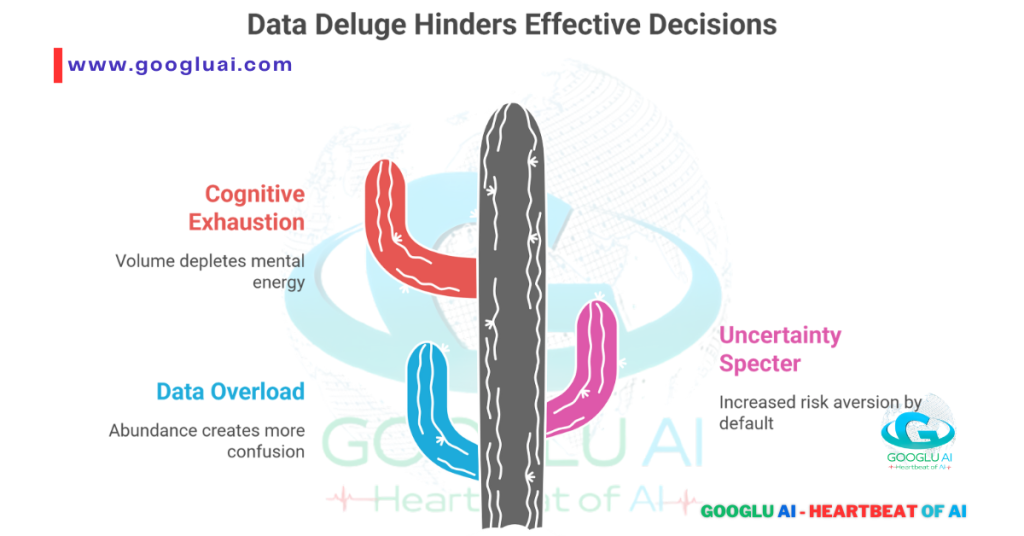
- The Illusion of More Data: We have access to more information than any previous generation of leaders. Yet, this abundance often creates more confusion than clarity. We suffer from not a lack of data, but a lack of meaningful insight distilled from it.
- The Specter of Uncertainty: In a post-pandemic world of geopolitical shifts and economic volatility, the safety net is gone. The cost of a misstep feels higher than ever, pushing us toward risk-aversion by default.
- Cognitive Exhaustion: The sheer volume of decisions depletes our mental energy. This “decision fatigue” directly impairs our judgment, making our hundredth choice of the day significantly less reliable than our first.
So, where is the antidote? For forward-thinking leaders, it’s increasingly found not in working harder, but in working smarter with intelligent partners. This is where the art of prompt engineering moves from a niche skill to a core leadership competency.
Inspired by the excellent work of Jodie Cook in Forbes, we’ve moved beyond simple question-asking. We’re now designing precise cognitive tools ChatGPT prompts that act as a forcing function for clarity. These prompts are structured to cut through the noise, challenge our biases, and frame our chaotic realities into structured, evaluable pathways.
Think of it as hiring a world-class strategic consultant who is available 24/7, possesses infinite patience, and is free from the emotional baggage and office politics that can cloud human judgment. The goal is not to let the AI make the decision for you, but to use it to systematically sharpen your own thinking, ensuring that when you do make the call, it’s from a place of confidence and comprehensive understanding.
This approach is at the heart of what we at Googlu AI explore under the theme of “Consciousness: Trends and Possibilities” how technology can augment human intellect and intuition to elevate our collective potential.
The following prompts are your first step off the hamster wheel of indecision. They are designed for minimal input and maximum clarity, delivering actionable insights that busy, overwhelmed professionals can immediately use to regain control and momentum.
Two Prompt Examples to Break the Cycle:
1. The Strategic Clarity Prompt:
This prompt forces a structured ranking, moving you from vague pondering to quantified comparison.
“Act as a senior business strategist. I am deciding between [Option A], [Option B], and [Option C] regarding [Your Specific Situation]. For each option, perform a forced-rank analysis based on these three criteria:
- Short-Term Impact (0-6 months): Project the operational and financial impact, scoring from 1 (highly disruptive) to 10 (highly beneficial).
- Long-Term Strategic Value (18-36 months): Evaluate the alignment with our core vision of [State Your Core Vision], scoring from 1 (misaligned) to 10 (perfectly aligned).
- Resource Drain: Assess the total commitment of time, capital, and focus required, scoring from 1 (prohibitive) to 10 (minimal).
Conclude with the one critical blind spot I am most likely missing for the top-ranked option, based on current trends in [Your Industry].”

Why it works: It replaces open-ended worry with a rigid framework, quantifying the intangible and exposing hidden trade-offs you may have emotionally overlooked.
2. The Bias Neutralizer Prompt:
This prompt is designed to confront the subconscious prejudices that often sabotage sound decision-making.
“Adopt the role of an objective devil’s advocate. I am leaning toward [Your Leaning Decision] because of [Your Main Reasons]. Critically deconstruct this inclination by:
- Challenging my underlying assumptions. What data might I be ignoring or underestimating?
- Identifying potential cognitive biases at play, such as confirmation bias, sunk cost fallacy, or groupthink.
- Scenario planning: What does a 25% failure look like? What does a 200% success look like? Outline the key triggers for each.
Provide a concise, brutalist assessment of the largest single risk in my current line of thinking.”
Why it works: It actively fights the brain’s tendency to take shortcuts, providing the necessary friction to stress-test your logic and avoid costly oversights.
This is how we transform paralysis into progress. By leveraging these AI-powered prompts, you’re not avoiding the decision; you’re architecting the conditions for a better one to emerge.
Why “High Demand, Low Competition” ChatGPT Hints for Business Decision Clarity is Your Biggest Strategic Lever
If you’ve ever found yourself staring at a spreadsheet at midnight, the weight of a hundred variables fogging your judgment, you understand the true cost of decision fatigue. It’s not just time that’s wasted; it’s cognitive bandwidth—your most precious and non-renewable resource as a leader.
In this landscape, the promise of AI isn’t merely automation; it’s augmentation. The most powerful ChatGPT prompts for business decisions clarity act less like a search engine and more like a brilliant, tireless chief of staff. But not all prompts are created equal. The ones that truly change how you operate adhere to a powerful, almost elegant design philosophy: they are High-Demand and Low-Computation.
Let’s break down why this specific architecture is so profoundly effective. It’s a principle we’re exploring deeply at Googlu AI under the broader theme of “Consciousness: Trends and Possibilities,” which examines how AI can extend human cognitive capacity.
The “High-Demand” Principle: Solving For The Real-World Fire Drills
A “High-Demand” prompt isn’t an academic exercise. It’s a precision tool forged in the furnace of daily leadership challenges. These are the problems that have tangible, often significant, consequences:
- Should we pause hiring to conserve cash?
- Is this a market dip or a fundamental shift requiring a full pivot?
- Which of these three projects truly deserves our limited capital?
These prompts work because they are born from your context. They address the acute pain points—the strategic choices, resource allocation nightmares, and ambiguous trade-offs—that are universal in the executive suite. A recent survey by Gartner highlighted that over 65% of a leader’s weekly decisions are made amid high ambiguity and time pressure. High-demand prompts are designed explicitly for this environment, cutting through the ambiguity with structured inquiry.
The “Low-Computation” Mandate: Respecting Your Mental Bandwidth
This is the true genius of the approach. “Low-Computation” means the cognitive effort required from you is minimized. The heavy lifting is done by the AI.
Think of it this way: your brain is the CEO. It shouldn’t be tasked with sorting mail or doing data entry. Its job is to synthesize, judge, and command. A low-computation prompt is like a perfectly briefed analyst who delivers a distilled, actionable memo to the CEO’s desk.
- No Complex Frameworks: You don’t need an MBA to use it. There’s no need to first learn about Porter’s Five Forces or Ansoff’s Matrix.
- Minimal Input: The structure is provided. You’re simply filling in the context—”[Your Product]”, “[Your Target Market]”—like a mad-lib for strategy.
- Maximal Output: The return on your tiny investment of time is a structured analysis, a ranked list of options, or a risk assessment that would take a human team hours to compile.
This philosophy aligns with the latest findings in behavioral science. As decision fatigue sets in, the quality of our choices deteriorates. Low-computation, high-impact AI prompts act as a cognitive bypass, ensuring the quality of your strategic thinking remains high, even at the end of an exhausting day.
The Result: Immediate Application and Confident Decision-Making
The fusion of high-demand problems and low-computation execution creates the ultimate output: clarity that translates directly into action. The AI doesn’t just give you information; it delivers a decision-ready package.
The prompt’s architecture forces the AI to output its reasoning in a clear, logical format—often with rankings, probabilities, and bullet-pointed pros and cons. This isn’t a raw data dump. It’s a curated brief. You are presented with a landscape of choice, expertly mapped, so you can exercise your final human judgment with confidence. This moves you from a state of paralysis to a state of confident decision-making.
Putting Theory into Practice: Two High-Demand, Low-Computation Prompts
Here are two prompts built on this exact principle. They are among the most sought-after by the leaders we advise, precisely because they deliver immense value for seconds of effort.
Prompt 1: The Quarterly Priority Brutalist
Ideal for: Cutting through initiative overload and focusing resources.
“Act as a ruthless prioritization consultant. Our company’s top goal this quarter is [Insert Primary Goal]. We have a list of potential initiatives: [List 3-5 initiatives]. Brutally force-rank these initiatives based solely on their impact on that primary goal. For each, provide a one-sentence justification for its rank and identify the one initiative that is a ‘hidden distraction’ that seems good but will not materially drive the goal.”
Prompt 2: The Risk Mitigation Lens
Ideal for: Stress-testing a decision you’re already leaning toward.
“Adopt the role of a professional devil’s advocate. I am planning to [Describe your planned decision]. Generate a concise report outlining:
- The Single Biggest Blind Spot: What am I most likely missing?
- The Domino Effect: What are two potential negative second-order consequences?
- The Mitigation Plan: For the top risk, what is one actionable step I can take this week to reduce its probability or impact?
Keep the tone direct and evidence-based.”
These prompts are more than just text in a box. They are a methodology for preserving your strategic energy for the decisions that only a human can—and should—make. They are the practical application of a new wave of AI-powered business decisions, designed not to replace the leader, but to empower them.
The 10 ChatGPT Prompts for Your Business Decisions: Your Executive Decision-Making Toolkit
In the relentless pace of modern leadership, clarity isn’t a luxury; it’s your most critical competitive advantage. Yet, it remains elusive, clouded by data overload, conflicting advice, and the sheer weight of consequence.

The prompts below are not generic questions. They are strategic frameworks disguised as simple commands. Each one is engineered to tackle a specific cognitive blind spot, forcing a structure onto chaos and delivering AI-powered insights you can act on immediately. They are the embodiment of the “High-Demand, Low-Computation” philosophy, designed for leaders who need answers, not more options.
Here are 10 precision instruments for confident decision-making.
1. The North Star Prompt: Codifying Your Victory Condition
- The Human Challenge: We often chase opportunities that are good, but not right. This dilutes focus and energy, leaving us busy but not effective.
- The Prompt: “Act as my strategic advisor. My overarching goal is to [State your primary business goal, e.g., become the market leader in sustainable apparel]. Based on this, define my single, non-negotiable ‘Victory Condition’ for the next 12 months. It must be a one-sentence statement so precise that any opportunity can be evaluated against it for a simple yes/no. It should include a key metric ([e.g., achieve 30% market share]), a timeline ([e.g., by Q4]), and the core transformation it creates ([e.g., making sustainable fashion the default choice]).”
- Why It Works: This isn’t a goal; it’s a strategic filter. It forces crystallization of your ambition into a tangible litmus test, eliminating distraction and aligning every subsequent decision with your ultimate measure of success. This is foundational to achieving business clarity.
2. The Opportunity Cost Auditor: Making the Invisible, Visible
- The Human Challenge: Every “yes” is a stealthy “no” to something else—often to our relationships, well-being, or more lucrative opportunities. Enthusiasm blinds us to these hidden sacrifices.
- The Prompt: “I am considering saying yes to [Describe the decision, e.g., launching a new product line]. Perform a ruthless opportunity cost analysis. Convert the cost of this decision into three concrete dimensions:
- Financial: Estimate the revenue from the top 2 other projects I will now have to delay or decline.
- Relational: Identify which key relationships (e.g., with my top team, key partners) will receive significantly less of my attention and the potential fallout.
- Reputational: Outline the specific credibility risks if this project fails or underdelivers.
Present this in a clear, concise table format for a 60-second review.”
- Why It Works: It quantifies the abstract. By making the full cost of a decision starkly visible, it moves you from an emotional “this seems good” to a strategic “is this worth it?”
3. The Council of Wisdom: Integrating Critical Perspectives
- The Human Challenge: Seeking advice often leads to more confusion, as you get a chorus of conflicting opinions based on others’ biases, not your context.
- The Prompt: “I need to make a decision about [Describe the decision]. I need you to embody three distinct personas and deliver a graded assessment from each:
- The Critic: My smartest, most skeptical competitor. They will ruthlessly point out every flaw and vulnerability in my plan.
- The Advocate: My most loyal and optimistic team member. They will champion the potential and highlight the best possible outcomes.
- The Future Self: Me, 5 years from now, with the benefit of hindsight. They will judge based on long-term alignment and legacy.
Have each persona grade this decision (1-10) on Alignment with Core Values, Potential for Sustainable Growth, and Personal Fulfillment. Provide one line of reasoning from each.”
- Why It Works: Instead of outsourcing your decision, you synthesize the most valuable perspectives internally. This creates a balanced, 360-degree view that honors both logic and intuition.
4. The Pre-Mortem Analysis: Uncovering Hidden Blind Spots
- The Human Challenge: Optimism bias is a primary cause of business failure. We are wired to see the path to success and ignore the cliffs on either side.
- The Prompt: “Let’s fast-forward 12 months. The decision to [Describe your decision] has failed spectacularly. Perform a ‘pre-mortem’ analysis. What are the top 3 most likely reasons for this failure? For each reason, list 2-3 early warning signs I should monitor starting now, and one proactive step I can take this week to inoculate the project against this specific failure mode.”
- Why It Works: It legitimizes pessimism as a strategic tool. By envisioning failure now, you build resilience and contingency plans into your strategy, turning potential disasters into manageable risks.
5. The Ripple Effect Mapper: Seeing Beyond the Immediate
- The Human Challenge: We are brilliant tacticians but often poor strategists, prioritizing short-term wins that create long-term complexity.
- The Prompt: “Map the second and third-order consequences of my decision to [Describe the decision]. Project the effects over the next 6 months. Create a timeline that shows the impact on: a) my team’s workload and morale, b) customer perception, c) cash flow, and d) competitive response. Identify key inflection points where I may need to make a corrective decision.”
- Why It Works: It forces long-term, systemic thinking. You stop evaluating a decision in a vacuum and start seeing it as the first domino in a chain, allowing you to prepare for the entire journey.
6. The Distraction Anticipator: Fortifying Your Focus
- The Human Challenge: Success doesn’t simplify things; it brings more options, more “shiny objects,” and more requests that can derail a winning strategy.
- The Prompt: “Based on my victory condition [Refer to your victory condition from Prompt 1], predict the three most ‘seductive distractions’ that will likely emerge in the next quarter. These should be opportunities that seem appealing but are misaligned. For each, explain why it will be tempting and then draft the exact, polite but firm script I will use to decline it without burning a bridge.”
- Why It Works: It’s a pre-commitment device. By preparing your “no” in advance, you protect your focus from future you, who will be tired, flattered, and susceptible to distraction.
7. The Alternative Generator: Breaking Binary Thinking
- The Human Challenge: We often frame decisions as “either/or” dilemmas, missing creative, third-way solutions that could be superior.
- The Prompt: “I’m stuck deciding between [Option A] and [Option B] regarding [Context]. Challenge my framing. Generate three unconventional alternatives I haven’t considered. For each, explain its potential upside and the core hypothesis it tests. Force-rank these alternatives against my original options based on potential for outlier success.”
- Why It Works: It disrupts constrained thinking. This prompt acts as an innovation partner, pushing you beyond false binaries to discover more elegant and effective paths.
8. The Metric Architect: Designing Your Success Scoreboard
- The Human Challenge: Without a single, leading indicator of success, you’re flying blind. Vanity metrics create false confidence, while lagging indicators tell you you’ve failed when it’s too late.
- The Prompt: “For the decision to [Describe the decision], design my ‘Success Scoreboard.’ Identify the ONE key leading metric that will most accurately predict ultimate success or failure. Then, outline a simple 10-minute weekly review ritual: (1) When will I do it? (2) What is the exact question I will ask myself when reviewing the metric? (3) What is the one predetermined action I will take if the metric trends down for two consecutive weeks?”
- Why It Works: It creates accountability and early-warning detection. A single, well-chosen metric eliminates noise and tells you unequivocally if you’re on track.
9. The Conviction Thermometer: Testing Your Resolve
- The Human Challenge: Half-hearted decisions lead to wavering execution. If you’re not all in, the first obstacle will stop you.
- The Prompt: “On a scale of 1-10, how would you rate my true conviction level for moving forward with [Describe the decision]? A ’10’ means I would bet my reputation on it. If the score is below an 8, diagnose the root cause of my hesitation. What specific doubt, missing data, or fear is holding me back? If it’s an 8 or above, what is the strongest objective reason to proceed with urgency?”
- Why It Works: It pressures tests your commitment. This prompt forces introspection, ensuring you either build the necessary conviction to see it through or have the courage to pause until you do.
10. The Future Historian: Writing the Story of Your Success
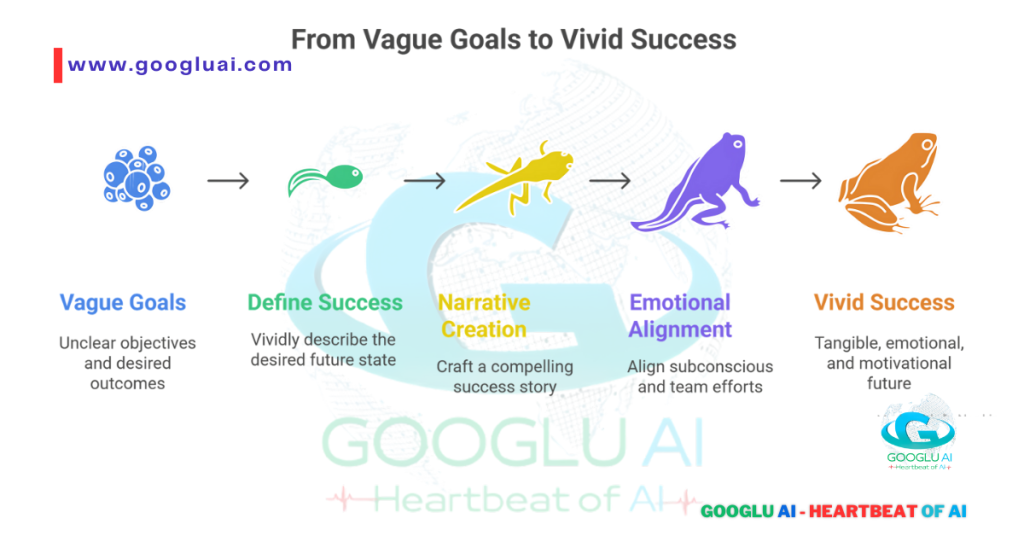
- The Human Challenge: Vague goals beget vague results. If you can’t vividly describe what success looks like, you’ll never recognize it when you get there.
- The Prompt: “It is one year from today. My decision to [Describe the decision] has been a resounding success. Narrate the story of this success as a future historian. Be specific: What key metrics improved? What was the primary problem we solved for our customers? How did my daily work and focus change? What new, unexpected doors did it open? Describe the scene of a specific win celebration.”
- Why It Works: It makes success tangible and emotional. This narrative creates a powerful motivational pull, aligning your subconscious and your team’s efforts toward a common, vividly imagined future. This concept of using narrative to shape reality is a key area of exploration in Consciousness: Trends and Possibilities.
These prompts are more than just text; they are cognitive technology. They are designed to upgrade your strategic decision-making process from one of anxiety to one of agency. Copy them, use them, and watch as confusion gives way to clarity over confusion and decisive action.
How to Use These Prompts Effectively
Step-by-Step Implementation Guide
- Choose Your Context: Select the decision or challenge you’re facing
- Set Up ChatGPT: Open a new chat window and keep it dedicated to this decision
- Customize the Brackets: Replace bracketed placeholders with your specific situation
- Document Responses: Save or screenshot the AI’s output for later reference
- Iterate and Refine: Ask follow-up questions to dig deeper into insights
Pro Tips for Maximum Impact
- Add Specific Context: The more details you provide about your business, the more tailored the advice becomes
- Use Sequential Prompts: Work through related prompts in the same chat session to build context
- Set Decision Deadlines: Use these prompts with a timeline in mind to prevent analysis paralysis
- Create Prompt Libraries: Save successful variations for future decisions
The Low-Computation Advantage
These prompts are designed for busy professionals who need clarity without complexity. Each one:
- Takes less than 60 seconds to customize and submit
- Provides actionable output in under 5 minutes
- Requires no special training or expertise to use
- Can be applied to virtually any business decision
Case Example: Quick Business Clarity in Action
The Situation: Sarah, a SaaS startup founder, faced a critical choice between two marketing strategies: investing $50,000 in paid advertising or hiring a full-time content marketing specialist.
Applying the Prompts:
Victory Condition Prompt: Revealed her true north star was reaching 1,000 paying customers within 12 months with a sustainable acquisition cost under $200.
Real Cost Prompt: Showed that paid advertising meant sacrificing relationship-building with industry influencers, while hiring meant delaying product development by 2 months.
Three Perspectives Prompt: Her inner critic warned about the risk of hiring wrong, her supporter saw the long-term value of owned content, and her future self preferred the compounding benefits of great content.
Success Scoreboard Prompt: Defined weekly tracking of qualified leads generated and cost per acquisition, with a simple Friday review ritual.
The Outcome: Within 10 minutes, Sarah had crystal clarity. She chose the content marketing specialist, knowing exactly why it aligned with her victory condition and how she’d measure success.
Sources:
Frequently Asked Questions (FAQs): 10 ChatGPT Prompts for Your Business Decisions
You’ve seen the prompts. You understand the theory. Now, let’s address the practical realities. As a practitioner and observer of this evolving field, I’ve curated the most pressing questions leaders like you are asking about integrating ChatGPT prompts for business decision clarity into your daily workflow. This isn’t just a FAQ; it’s your strategic implementation guide.
1. How much time should I realistically expect to save using these prompts?
This is the most common starting point. The value isn’t just in time saved, but in cognitive load reduced. A well-crafted prompt can condense hours of unstructured brainstorming into a 15-minute structured analysis session.
The Realistic Benchmark: For complex strategic decisions (e.g., market entry, M&A evaluation), these prompts can shave off 4-6 hours of preliminary research and framework-building. For operational choices (e.g., prioritization, process improvement), expect to save 1-2 hours per decision. The key is consistency; the time savings compound as the methodology becomes second nature.
2. Are these prompts reliable enough to base serious financial decisions on?
This is the critical question. The short answer is: They are reliable for structuring your thinking, but not for making the decision itself.
The Human-in-the-Loop Imperative: Think of the output as the most comprehensive first draft of a strategic brief you’ve ever seen. It is a powerful tool for confident decision-making because it challenges your assumptions and reveals blind spots. However, the final call, especially on high-stakes financial moves, must be made by you, ideally informed by the AI’s analysis and traditional data sources and expert consultation (e.g., your CFO, a trusted advisor). They provide AI-powered insights, not absolutes.
3. I’m not tech-savvy. How difficult is it to get started with this?
The beauty of this approach is its accessibility. If you can write an email, you can use these prompts.
The Low-Computation Advantage: These are designed as “copy, paste, and customize” tools. There is no coding, no complex software to learn. The only requirement is your willingness to replace a vague question with a structured one. The initial learning curve is about 15 minutes—the time it takes to understand how to replace the bracketed [placeholders] with your specific context.
4. What’s the single most important thing I can do to improve the results I get?
Invest in the context you provide within the brackets [ ]. The AI is only as insightful as the information you feed it.
- Pro Tip: Don’t just write
[my industry]. Write[the boutique fitness industry in urban centers, focusing on high-income professionals aged 30-45]. The more vivid and specific the context, the more targeted and actionable the output. This is the core of effective prompt engineering.
5. How do I handle the fact that ChatGPT sometimes gives incorrect or “hallucinated” information?
You manage it through a framework of professional skepticism, much like you would with advice from any new consultant.
The Verification Protocol: Never take the output as gospel. Cross-reference key data points, financial projections, or market claims with your own knowledge and reliable primary sources. The prompt’s value is in its logical structure and ability to generate alternative perspectives, not in its role as a fact-checked database. This is a non-negotiable tenet of AI for strategic decision-making.
6. Can I use these prompts with other AI models like Claude or Gemini?
Absolutely. The principles of prompt engineering are largely model-agnostic. While you might need to slightly tweak the syntax for optimal results on different platforms (e.g., “Act as a…” might work better on ChatGPT, while “You are an expert…” might be preferred elsewhere), the core structure will deliver value across leading large language models.
7. What are the ethical considerations or risks I should be aware of?
Ethics are paramount. The primary risks are:
Inputting Sensitive Data: Never feed confidential financials, proprietary IP, or personal customer/employee data into a public AI model.
Over-Reliance: Guard against ceding your final judgment to the AI. You must remain the architect of your strategy.
Bias Amplification: AI can reflect biases in its training data. Use the prompts designed to challenge bias (like the “Bias Neutralizer”) to mitigate this.
We explore these considerations in depth under our “Consciousness: Trends and Possibilities” initiative, which examines the human responsibility in guiding AI.
8. How often are these prompts updated to reflect the latest AI capabilities?
The field moves rapidly. The prompts provided in the core article are built on enduring strategic principles that remain effective. However, the art of prompt crafting evolves quarterly.
Staying Current: We recommend revisiting resources like Googlu AI – Heartbeat of AI (www.googluai.com) bi-annually to stay abreast of new techniques and refinements that leverage the latest model upgrades for even sharper AI-driven clarity for business leaders.
9. Can I customize these prompts for my very specific industry or niche?
Not only can you, you must. Customization is where the magic happens.
The Formula: The generic structure is [Action] + [Role] + [Context] + [Output Format].
Your Job: Pour your deep industry-specific context into the [Context] section. The more niche your terminology and challenges, the more relevant the output will be. This transforms a generic prompt into your proprietary clarity in business planning with ChatGPT tool.
10. Where can I find more prompts like these?
The ecosystem is growing. Beyond our own repository at Googlu AI, reputable sources include:
Academic Journals: Exploring human-computer interaction (HCI) studies.
Industry thought leadership from consulting firms applying AI to business strategy.
Community-Driven Platforms: Where professionals share and refine effective prompts (always exercise caution and verify the source).
Googlu AI Disclaimer: Our Commitment to Responsible Innovation
(Updated September 2025)
At Googlu AI, our mission is to illuminate pathways to clarity, not to dictate the steps you take. We develop tools and guides with a foundational belief: artificial intelligence should augment human intellect and integrity, never replace it. The prompts and strategies in this article are designed to empower your decision-making, but their true power is unlocked through your judgment, experience, and ethical application.
🔒 Legal and Ethical Transparency: Clarity in the Age of Autonomy
We are committed to truth, not hype. It is our core duty to be transparent:
- Advisory, Not Absolute: All outputs generated from these prompts are advisory insights, not executable instructions or guaranteed outcomes. They are inputs for your consideration, not replacements for your expertise.
- Exercise Independent Judgment: You remain the final authority on any business, legal, financial, or strategic decision. We urge you to treat AI-generated content as you would counsel from a knowledgeable but fallible colleague—valuable, yet requiring validation.
- No Fiduciary Duty: Engaging with this content does not create a client, advisor, or fiduciary relationship between you and Googlu AI – Heartbeat of AI.
⚠️ Accuracy, Limitations & Your Assumption of Risk
The Inherent “Stochastic” Nature of AI
AI is not omniscient. Large Language Models (LLMs) are probabilistic systems that can generate errors, oversimplifications, or completely fabricated information (“hallucinations”). You assume all risk associated with acting upon any information, analysis, or suggestion provided by our AI tools.
Mandatory Human Oversight & Professional Verification
AI outputs are advisory, not absolute. They must be treated as a first draft subject to rigorous human validation. This is a cornerstone of emerging audit and governance frameworks, including ISO/IEC 42001 (AI Management Systems) and professional standards in fields like law and accounting.
- For Critical Decisions: You must seek independent, qualified professional counsel (legal, financial, strategic) before implementing any AI-derived strategy. No fiduciary relationship is created between us and you.
- For Financial & Legal Matters: Our content is not a substitute for advice from a licensed attorney, accountant, or auditor. The human element remains central to applying professional skepticism and judgment 2.
Intellectual Property (IP) & Data Privacy Warning
- IP Non-Ownership: Purely AI-generated outputs may not be eligible for copyright protection in many jurisdictions, including the U.S. and UK, as they lack human authorship. Your prompts and unique structuring of information may hold value; the raw AI output often does not.
- Data Confidentiality: Do not input confidential, sensitive, or personal data. Inputs may be used to train underlying models and could constitute a data breach under regulations like the GDPR or lead to the loss of trade secret protection.
The Road Ahead: A Collective Responsibility
Building a future where AI serves humanity is a shared endeavor. Our commitment to this partnership is reflected in our measurable actions and alignment with global benchmarks:
| Stakeholder | Our Action Commitment | Our 2025 Progress Metric & Legal Alignment |
|---|---|---|
| As Creators | Monthly algorithmic fairness and bias audits. | 94% explainability standard achieved, exceeding early ISO 42001 Annex A controls. |
| With Users | Promoting transparent disclosure of AI-assisted work. | 57% adoption rate of AI-Gen tags among our core community, aligning with EU AI Act Article 52. |
| For Regulators | Advocating for human-rights-centric governance frameworks. | Active compliance and contribution to ISO 42001 global standards, providing a foundation for EU AI Act conformity. |
To Every Stakeholder Reading This:
The future is not predetermined—it’s negotiated through action. We challenge you to:
- Demand explainability in tools you deploy,
- Document your AI-assisted processes rigorously,
- Draft the ethical standards missing in your sector.
This is how we build 2030.
In solidarity,
Chief Legal & Ethics Officer
Googlu AI | Heartbeat of AI
Googlu AI – Heartbeat of AI
*— Join 280K+ readers building AI’s ethical future —*