SHOCKING AI That Broke the Internet This Month: DeepSeek, GPT-5, Google’s MAD & Mangle, and More
Introduction : The AI Revolution Hits Overdrive Artificial intelligence no longer evolves in quiet laboratories…
AI governance is the strategic orchestration of ethics, accountability, and innovation to ensure artificial intelligence systems operate as trustworthy partners in human progress. By 2030, it has evolved from a reactive compliance checklist to a proactive, dynamic discipline that blends human oversight with AI-driven safeguards. At its core, AI governance answers two critical questions: How do
Introduction : The AI Revolution Hits Overdrive Artificial intelligence no longer evolves in quiet laboratories — it dominates headlines, boardrooms, and living rooms. Every month brings breakthroughs, but this month has been extraordinary. From brain-inspired reasoning agents to open-source giants, from Google’s ambitious frameworks to humanoid robots with shared operating systems, the pace of innovation feels like the dawn of a new industrial age. At Googlu AI – Heartbeat of AI, our mission is not just to report news but to decode these shifts, highlight their broader implications, and keep our readers at the cutting edge of AI knowledge. Let’s explore the game-changers shaping this month — and our future. HRM: Brain-Inspired AI That Punches Above Its Weight Singapore’s HRM AI agent has taken the research world by surprise. Unlike traditional “bigger is better” models, HRM is built on a two-level brain-inspired design: Despite being just 27 million parameters, HRM has outperformed giants like Claude 3.7 and OpenAI’s o3-mini-high in reasoning benchmarks. 🔑 Why it matters: HRM proves that smarter architecture can rival brute computational force, opening the door to more efficient, affordable, and environmentally sustainable AI. DeepSeek V3.1: Open-Source Titan With 685B Parameters Open-source just got a seismic boost. DeepSeek V3.1 packs 685 billion parameters and a 128K token context window. Early tests suggest it competes directly with GPT-5 — but at a fraction of the cost. 🔑 Why it matters: Think of it as the “Linux moment” for generative AI. Google’s Triple Play: MLE-STAR, MAD, and Mangle Google has dropped three bold innovations: 🔑 Why it matters: Together, these tools signal Google’s attempt to redefine AI’s foundations — moving from “smart systems” to self-evolving systems. Robotics: The Rise of Next-Gen Humanoids But the real shockwave comes from OpenMind’s OM1 OS — the world’s first open-source operating system for humanoid robots, created by ex-Google and Tesla engineers. 🔑 Why it matters: Just like Android transformed smartphones, OM1 could unify robotics, enabling a shared ecosystem where robots learn faster, get cheaper, and reach industries sooner. GPT-5: The Next Leap in Conversational AI OpenAI has confirmed seven new GPT-5 features, including: 🔑 Why it matters: GPT-5 moves closer to being a true digital companion, not just a chatbot. For businesses, this means hyper-personalized customer support, smarter automation, and creative assistance at scale. China’s National Strategy: Embodied Intelligence China is investing billions into embodied intelligence — AI that learns and acts in the physical world. From humanoid robots to autonomous vehicles, this strategy represents a coordinated, state-backed drive toward dominance in AI-driven industries. 🔑 Why it matters: Expect faster adoption in smart manufacturing, healthcare robotics, and military applications, intensifying the U.S.–China AI race. Beyond the Tech: Legal, Ethical, and Societal Shifts What makes these breakthroughs more than engineering marvels are their ripple effects: Conclusion: The Future Arrives Faster Than We Think This month’s AI breakthroughs aren’t isolated — they’re milestones in a race that’s reshaping society. HRM proves intelligence can be compact. DeepSeek proves openness can rival exclusivity. Google proves AI can evolve itself. Robotics is gaining a shared platform. GPT-5 promises human-like interaction. And China is investing at national scale. At Googlu AI, we see these not as hype but as signposts of a future defined by intelligent possibilities. The challenge now is not just building AI, but ensuring it serves humanity — responsibly, ethically, and inclusively. The revolution is here. The question is: How will we shape it? Frequently Asked Questions, (FAQ) People Also Ask (PAA) Q1: Why is HRM important for the future of AI? HRM demonstrates that architectural innovation can rival or even surpass massive models. With only 27M parameters, it outperformed much larger systems like Claude 3.7. This makes AI not only smarter and more efficient but also more cost-effective and sustainable, reducing the energy demands of large-scale AI training. HRM is a brain-inspired AI agent with a two-level system (planner + worker). It matters because it outperforms larger models with fewer parameters, making AI more efficient and sustainable. Q2: How does DeepSeek V3.1 compare to GPT-5? DeepSeek V3.1 is an open-source AI model with 685B parameters and a 128K token context window. While GPT-5 remains proprietary, DeepSeek offers comparable performance at lower costs, making it more accessible to startups, universities, and independent researchers. DeepSeek V3.1 has 685 billion parameters and a 128K token context window. It delivers performance close to GPT-5 but is open-source and more cost-effective. Q3: What is OpenMind’s OM1 OS, and why is it a game-changer? OpenMind’s OM1 OS is the first open-source operating system for humanoid robots, designed by ex-Google and Tesla engineers. Much like Android standardized smartphones, OM1 could unify humanoid robotics, enabling faster development, cross-compatibility, and wider adoption in industries like manufacturing, logistics, and healthcare. OpenMind OM1 OS is the first open-source operating system for humanoid robots. It aims to standardize robotics development like Android did for smartphones. Q4: What are GPT-5’s most exciting new features? GPT-5 introduces multimodal capabilities (integrating text, images, and potentially video/audio), enhanced memory for long-term context retention, and personalized experiences tailored to user preferences. These features bring AI interactions closer to human-like, adaptive communication. GPT-5 introduces multimodal AI (text + images), long-term memory, and personalization, making interactions more human-like and adaptive. Q5: How will AI regulation in the U.S. and EU affect innovation? The EU AI Act and the U.S. AI Bill of Rights are designed to ensure safety, accountability, and fairness. They will require companies to adopt transparency, data protection, and ethical safeguards. While this may slow down some deployments, it ensures AI grows responsibly and with public trust. AI regulation will enforce transparency, accountability, and data safety. Businesses will need to comply but will gain more trustworthy AI adoption. Q6: Why is China’s embodied intelligence strategy significant? China is investing heavily in embodied intelligence — AI systems that can learn and act in the physical world, such as humanoid robots and autonomous vehicles. This national strategy, supported by billions in funding, positions China as a leader in AI-driven industries, intensifying global competition….
Amid this transformation, a Chinese-founded AI agent startup, Manus AI, has emerged as a serious disruptor. Backed by the AI-focused startup studio Butterfly Effect, Manus AI recently raised $75 million in Series B funding from Benchmark, giving the company a striking valuation of $500 million.
10 ChatGPT Prompts for Your Business Decisions, Staring at two spreadsheets, three Slack threads, and a calendar full of half-baked options? You’re not alone. Decision paralysis is the silent tax on every entrepreneur’s time. Inspired by a Forbes piece that surfaced five AI prompts for clarity, this guide doubles the playbook—ten plug-and-play prompts you can paste into ChatGPT today. No coding. No jargon. Just clarity.
Sam Altman Interview: What Can GPT-5 DO? Executive summary In this in-depth synthesis of Sam Altman’s wide-ranging conversation on GPT‑5 and the road toward superintelligence, we extract the core capabilities, limits, timelines, technical bottlenecks, safety dilemmas, and societal impacts discussed, translating them into an actionable guide for researchers, searchers, and students.
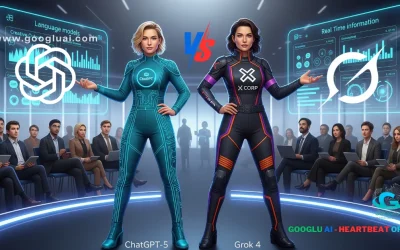
ChatGPT-5 vs Grok 4: 2025’s Ultimate AI Showdown: Which One Really Wins? Your boss needs a thorough analysis of the latest market trends for an important client meeting tomorrow. You need an AI partner that goes beyond repeating facts and helps you seem smart, prepared, and insightful. Do you choose ChatGPT-5, known for its polished, reliable answers? Or do you pick Grok 4, the challenger offering real-time data and expert-level thinking?
Welcome to the future of AI. Ultimate GPT-5-Prompt Guide, Unlock Peak Performance. GPT-5 is here, and it’s a game-changer. This new flagship model is a powerhouse, showing massive improvements in raw intelligence, coding skills, and its ability to act as a smart AI agent.
KIMI K2: The Next-Generation AI Powerhouse. The landscape of artificial intelligence is perpetually evolving, with new breakthroughs and models emerging at a rapid pace. Among these advancements, KIMI K2 AI, developed by Moonshot AI, stands out as a significant leap forward, promising to redefine the capabilities of Large Language Models (LLMs). This article, presented by Googlu AI – Heartbeat of AI (www.googluai.com), aims to provide a comprehensive overview of KIMI K2, delving into its core strengths, innovations, and its position within the competitive AI market.
The Unseen Superpower of AI: Unlock AI’s true power not with code, but with curiosity. Strategic Questioning in AI and Harnessing AI is the decisive edge separating leaders from observers in 2025-2030. At Googlu AI, we empower you to transform algorithms into ethical impact through precision inquiry and responsible frameworks. Discover how human-centric questioning redefines success across healthcare, finance, and education—because the future belongs to those who ask better.
Kimi K2: The Open-Source Agentic AI Model Outperforming GPT-4 on Code
The era of passive chatbots is over. In 2025, AI’s frontier is defined by agents—models that don’t just answer questions but act, execute, and solve. Leading this revolution is Kimi K2, an open-source marvel from Moonshot AI that’s shattering cost barriers and outperforming giants like GPT-4 and Claude 3.5 in coding, reasoning, and real-world automation.
GPT-5: Release Date, Rumored Features, and What to Expect
The AI landscape isn’t just evolving—it’s undergoing a philosophical transformation. As OpenAI’s most anticipated release since ChatGPT’s debut, GPT-5 represents more than a technical upgrade; it heralds a fundamental shift toward what insiders call “Unified Intelligence.” For global audiences from Tokyo to Toronto, Dubai to Dublin, this isn’t merely another AI model. It’s the blueprint for AI that thinks, sees, and acts as a seamless extension of human cognition.