Table of Contents
Introduction : The AI Revolution Hits Overdrive
Artificial intelligence no longer evolves in quiet laboratories — it dominates headlines, boardrooms, and living rooms. Every month brings breakthroughs, but this month has been extraordinary. From brain-inspired reasoning agents to open-source giants, from Google’s ambitious frameworks to humanoid robots with shared operating systems, the pace of innovation feels like the dawn of a new industrial age.
At Googlu AI – Heartbeat of AI, our mission is not just to report news but to decode these shifts, highlight their broader implications, and keep our readers at the cutting edge of AI knowledge. Let’s explore the game-changers shaping this month — and our future.
HRM: Brain-Inspired AI That Punches Above Its Weight
Singapore’s HRM AI agent has taken the research world by surprise. Unlike traditional “bigger is better” models, HRM is built on a two-level brain-inspired design:
- A high-level planner for strategy.
- A low-level worker for execution.
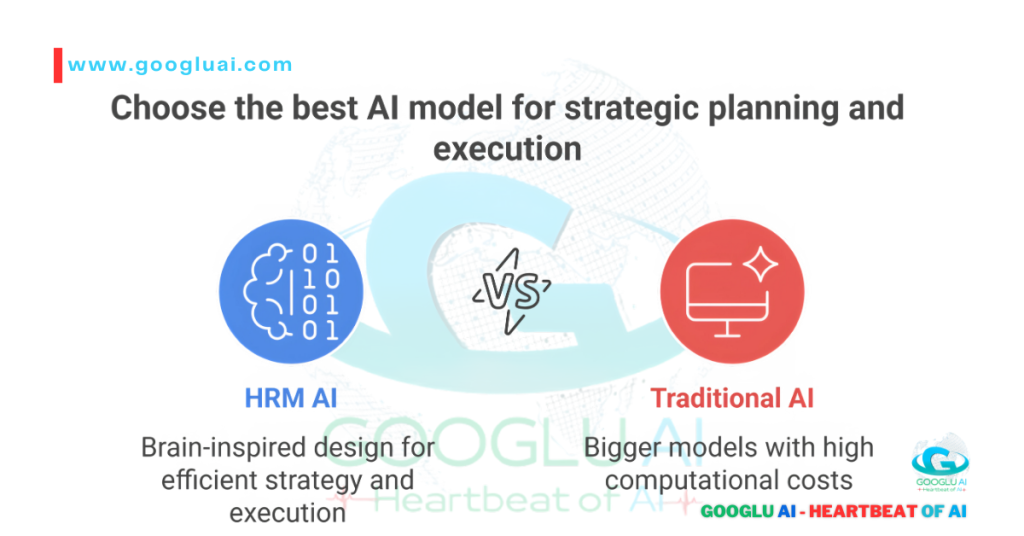
Despite being just 27 million parameters, HRM has outperformed giants like Claude 3.7 and OpenAI’s o3-mini-high in reasoning benchmarks.
🔑 Why it matters: HRM proves that smarter architecture can rival brute computational force, opening the door to more efficient, affordable, and environmentally sustainable AI.
DeepSeek V3.1: Open-Source Titan With 685B Parameters
Open-source just got a seismic boost. DeepSeek V3.1 packs 685 billion parameters and a 128K token context window. Early tests suggest it competes directly with GPT-5 — but at a fraction of the cost.
🔑 Why it matters:
- Democratizes cutting-edge AI for startups, researchers, and universities.
- Levels the playing field against proprietary AI monopolies.
- Spurs faster global collaboration in science, medicine, and education.
Think of it as the “Linux moment” for generative AI.
Google’s Triple Play: MLE-STAR, MAD, and Mangle
Google has dropped three bold innovations:
- MLE-STAR – A self-improving AutoML agent that learns to optimize itself, reducing human intervention in AI development.
- MAD – A next-gen system for processing internet-scale data more efficiently.
- Mangle – A reasoning language designed to boost logical and inferential abilities.
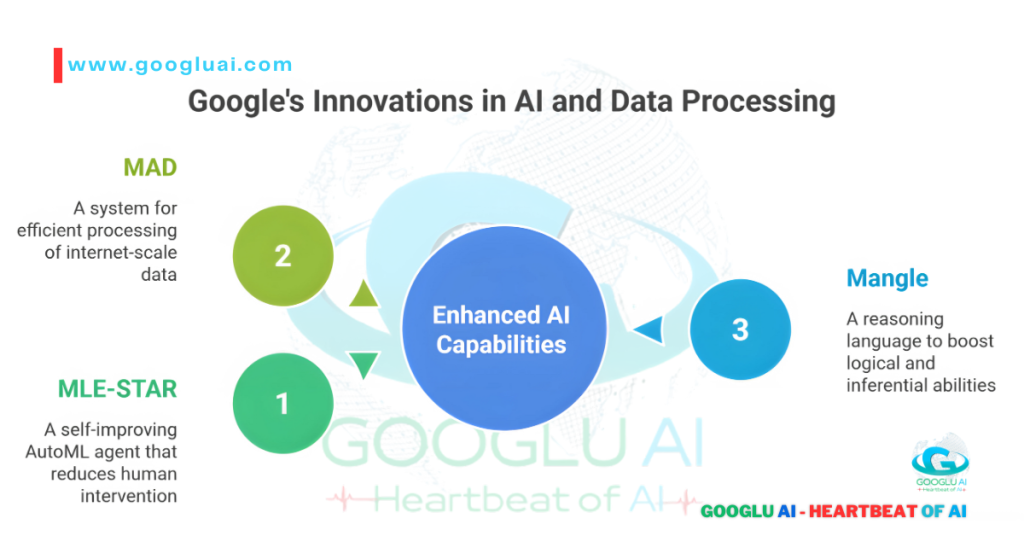
🔑 Why it matters: Together, these tools signal Google’s attempt to redefine AI’s foundations — moving from “smart systems” to self-evolving systems.
Robotics: The Rise of Next-Gen Humanoids
- Boston Dynamics Atlas – Upgraded with a new AI brain, making it more autonomous in complex environments.
- Unitree’s flagship humanoid – A direct rival in the humanoid race, pushing agility and affordability.
But the real shockwave comes from OpenMind’s OM1 OS — the world’s first open-source operating system for humanoid robots, created by ex-Google and Tesla engineers.
🔑 Why it matters: Just like Android transformed smartphones, OM1 could unify robotics, enabling a shared ecosystem where robots learn faster, get cheaper, and reach industries sooner.
GPT-5: The Next Leap in Conversational AI
OpenAI has confirmed seven new GPT-5 features, including:
- Unified multimodal system – Seamless integration of text, images, and beyond.
- Long-term memory – Sustained context over extended interactions.
- Personalized AI experiences – Adapts to user styles, preferences, and needs.
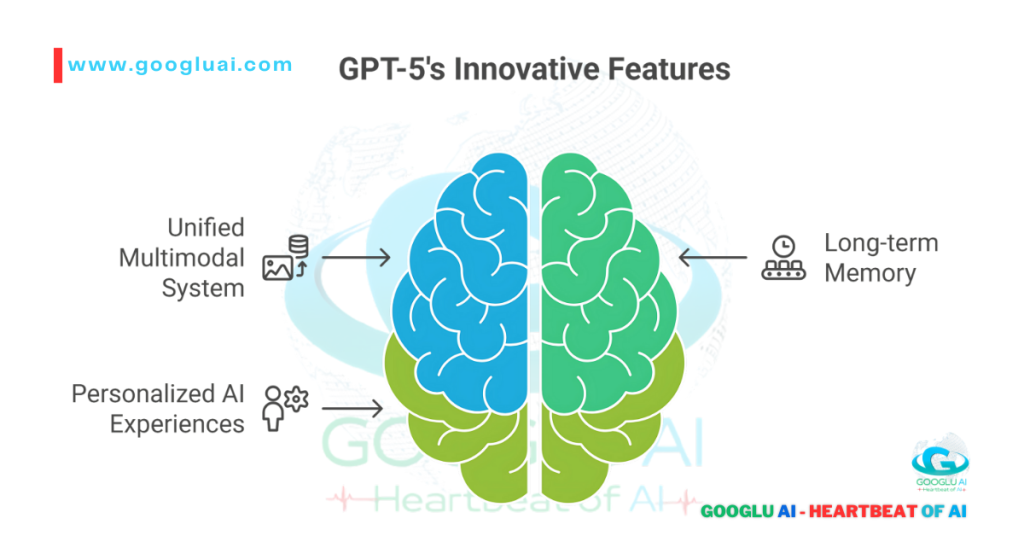
🔑 Why it matters: GPT-5 moves closer to being a true digital companion, not just a chatbot. For businesses, this means hyper-personalized customer support, smarter automation, and creative assistance at scale.
China’s National Strategy: Embodied Intelligence
China is investing billions into embodied intelligence — AI that learns and acts in the physical world. From humanoid robots to autonomous vehicles, this strategy represents a coordinated, state-backed drive toward dominance in AI-driven industries.
🔑 Why it matters: Expect faster adoption in smart manufacturing, healthcare robotics, and military applications, intensifying the U.S.–China AI race.
Beyond the Tech: Legal, Ethical, and Societal Shifts
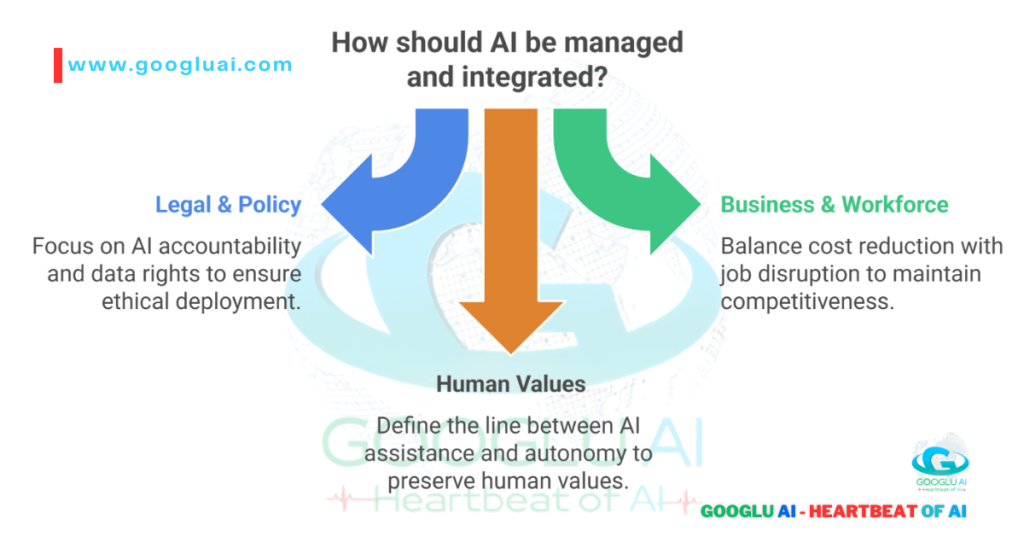
What makes these breakthroughs more than engineering marvels are their ripple effects:
- Legal & Policy (U.S. & EU): With systems like GPT-5 and OpenMind, regulators face urgent questions around AI accountability, data rights, and robot liability. The EU’s AI Act and U.S. AI Bill of Rights will directly shape how these tools are deployed.
- Business & Workforce: Tools like HRM and DeepSeek could cut operational costs but also disrupt white-collar jobs. Future competitiveness will rely on how businesses integrate AI, not whether.
- Human Values: With humanoids and multimodal AI, we must ask: Where do we draw the line between assistance and autonomy?
Conclusion: The Future Arrives Faster Than We Think
This month’s AI breakthroughs aren’t isolated — they’re milestones in a race that’s reshaping society. HRM proves intelligence can be compact. DeepSeek proves openness can rival exclusivity. Google proves AI can evolve itself. Robotics is gaining a shared platform. GPT-5 promises human-like interaction. And China is investing at national scale.
At Googlu AI, we see these not as hype but as signposts of a future defined by intelligent possibilities. The challenge now is not just building AI, but ensuring it serves humanity — responsibly, ethically, and inclusively.
The revolution is here. The question is: How will we shape it?
Frequently Asked Questions, (FAQ) People Also Ask (PAA)
Q1: Why is HRM important for the future of AI?
HRM demonstrates that architectural innovation can rival or even surpass massive models. With only 27M parameters, it outperformed much larger systems like Claude 3.7. This makes AI not only smarter and more efficient but also more cost-effective and sustainable, reducing the energy demands of large-scale AI training.
HRM is a brain-inspired AI agent with a two-level system (planner + worker). It matters because it outperforms larger models with fewer parameters, making AI more efficient and sustainable.
Q2: How does DeepSeek V3.1 compare to GPT-5?
DeepSeek V3.1 is an open-source AI model with 685B parameters and a 128K token context window. While GPT-5 remains proprietary, DeepSeek offers comparable performance at lower costs, making it more accessible to startups, universities, and independent researchers.
DeepSeek V3.1 has 685 billion parameters and a 128K token context window. It delivers performance close to GPT-5 but is open-source and more cost-effective.
Q3: What is OpenMind’s OM1 OS, and why is it a game-changer?
OpenMind’s OM1 OS is the first open-source operating system for humanoid robots, designed by ex-Google and Tesla engineers. Much like Android standardized smartphones, OM1 could unify humanoid robotics, enabling faster development, cross-compatibility, and wider adoption in industries like manufacturing, logistics, and healthcare.
OpenMind OM1 OS is the first open-source operating system for humanoid robots. It aims to standardize robotics development like Android did for smartphones.
Q4: What are GPT-5’s most exciting new features?
GPT-5 introduces multimodal capabilities (integrating text, images, and potentially video/audio), enhanced memory for long-term context retention, and personalized experiences tailored to user preferences. These features bring AI interactions closer to human-like, adaptive communication.
GPT-5 introduces multimodal AI (text + images), long-term memory, and personalization, making interactions more human-like and adaptive.
Q5: How will AI regulation in the U.S. and EU affect innovation?
The EU AI Act and the U.S. AI Bill of Rights are designed to ensure safety, accountability, and fairness. They will require companies to adopt transparency, data protection, and ethical safeguards. While this may slow down some deployments, it ensures AI grows responsibly and with public trust.
AI regulation will enforce transparency, accountability, and data safety. Businesses will need to comply but will gain more trustworthy AI adoption.
Q6: Why is China’s embodied intelligence strategy significant?
China is investing heavily in embodied intelligence — AI systems that can learn and act in the physical world, such as humanoid robots and autonomous vehicles. This national strategy, supported by billions in funding, positions China as a leader in AI-driven industries, intensifying global competition.
China sees embodied intelligence — AI in physical systems like robots — as critical for global leadership. It invests billions to integrate AI into industries such as manufacturing and healthcare.
Q7: How do robotics advancements like Atlas and Unitree affect daily life?
Upgrades to Boston Dynamics Atlas and Unitree humanoids push robotics toward practical real-world applications. In the near future, humanoid robots may assist in warehouses, hospitals, disaster zones, and even homes, improving safety, productivity, and accessibility.
They advance robotics toward real-world use in warehouses, hospitals, and emergency services, enhancing productivity and safety.
Q8: What role will open-source AI play in the future?
Open-source models like DeepSeek V3.1 and OpenMind OM1 OS democratize access to cutting-edge AI. They enable faster innovation, reduce costs, and prevent over-reliance on a few big tech companies. This ensures a more collaborative and inclusive AI ecosystem.
Open-source AI democratizes innovation, reduces reliance on big tech companies, and accelerates global collaboration.
Q9: What challenges come with these AI breakthroughs?
Key challenges include:
- Job disruption as AI automates white-collar and technical tasks.
- Ethical dilemmas around AI autonomy, decision-making, and bias.
- Security risks such as AI misuse in cyberattacks or misinformation.
Balancing innovation with responsibility and safeguards is essential.
Key risks include job disruption, ethical dilemmas, bias in AI decisions, and security threats like cyber misuse.
Q10: How does Googlu AI support readers in navigating these rapid changes?
Googlu AI serves as a trusted guide by:
- Breaking down complex technologies into clear insights.
- Highlighting ethical, legal, and business implications.
- Providing updates on the latest AI breakthroughs worldwide.
Our mission is to keep readers informed, empowered, and ahead of the curve in the ever-evolving AI landscape.
Googlu AI explains AI breakthroughs clearly, covers ethical and legal impacts, and ensures readers stay ahead in the AI revolution.
Disclaimer from Googlu AI: Our Commitment to Responsible Innovation
(Updated September 2025)
At Googlu AI – Heartbeat of AI (www.googluai.com), our mission goes beyond tracking breakthroughs — we advocate for responsible, human-centric innovation. As stewards of artificial intelligence, we commit to transparency, ethics, and human agency in every insight we publish. This guide empowers not just AI researchers but also non-technical professionals, entrepreneurs, and everyday readers. Its true value lies in how responsibly you wield these technologies.
🔒 Legal and Ethical Transparency: Truth in the Age of Autonomy
We acknowledge the dual nature of AI — immense potential and serious risks. Every report we publish is grounded in verified, credible sources, and where speculation exists, we make it clear. Googlu AI does not endorse unethical uses of AI such as surveillance abuse, misinformation campaigns, or exploitation of human labor.
🧭 Accuracy & Evolving Understanding
AI evolves at lightning speed. While we strive for accuracy, no article can fully capture tomorrow’s breakthroughs. We continuously update our analyses, integrating latest findings, regulatory shifts, and ethical debates to ensure our readers stay ahead with reliable information.
🌐 Third-Party Resources
Some references, benchmarks, and models we discuss come from external developers, researchers, or open-source communities. We do not control these third-party resources, and their applications may differ across industries. Always evaluate tools independently before adoption.
⚠️ Risk Acknowledgement
AI is powerful — but with power comes responsibility. Risks include:
- Bias and fairness issues in algorithmic decisions.
- Data privacy concerns and potential misuse of personal information.
- Job displacement and workforce disruption.
- Security threats, including malicious AI applications.
We urge readers, businesses, and policymakers to engage critically with AI, balancing innovation with human dignity, fairness, and safety.
💛 A Note of Gratitude: Why Your Trust Fuels Ethical Progress
Your trust drives our mission. In 2025 alone:
- Thousands of readers engaged with Googlu AI insights.
- Businesses adopted responsible AI strategies based on our research.
- Communities joined our conversations about ethics, law, and human values.
Every reader, subscriber, and partner strengthens our collective ability to shape AI responsibly.
🌍 The Road Ahead: Collective Responsibility
The 2030 AI landscape will be defined by choices we make today. Governments, companies, developers, and everyday users must work together to ensure AI serves humanity first. Googlu AI pledges to remain a transparent, ethical, and forward-looking platform, but true progress requires a shared commitment to accountability.
💛 A Note of Gratitude: Thank You for Trusting Us
To our readers, researchers, and partners — thank you. Your engagement, curiosity, and responsibility keep us motivated to deliver insights that matter. Together, we can ensure that the future of AI is not only intelligent but also just, inclusive, and profoundly human.
Googlu AI – Heartbeat of AI: Where Technology Meets Conscience.
— *Join 280K+ readers building AI’s ethical future* —