


A professional-looking woman in a modern office setting, looking thoughtfully into the distance while her hand appears to interact with a futuristic, holographic interface floating in front of her. The interface lists key AI breakthroughs with their respective logos: "DeepSeek," "GPT-5," and "Google MAD & Mangle." The image's title, "SHOCKING AI That Broke the Internet This Month," is prominently displayed in the top right, and the "Googlu AI - Heartbeat of AI" logo is in the bottom right corner. The visual combines a human element with futuristic technology to represent the new era of AI.

SHOCKING AI That Broke the Internet This Month: DeepSeek, GPT-5, Google’s MAD & Mangle, and More

Introduction : The AI Revolution Hits Overdrive Artificial intelligence no longer evolves in quiet laboratories — it dominates headlines, boardrooms, and living rooms. Every month brings breakthroughs, but this month has been extraordinary. From brain-inspired reasoning agents to open-source giants, from Google’s ambitious frameworks to humanoid robots with shared operating systems, the pace of innovation feels like the dawn of a new industrial age. At Googlu AI – Heartbeat of AI, our mission is not just to report news but to decode these shifts, highlight their broader implications, and keep our readers at the cutting edge of AI knowledge. Let’s explore the game-changers shaping this month — and our future. HRM: Brain-Inspired AI That Punches Above Its Weight Singapore’s HRM AI agent has taken the research world by surprise. Unlike traditional “bigger is better” models, HRM is built on a two-level brain-inspired design: Despite being just 27 million parameters, HRM has outperformed giants like Claude 3.7 and OpenAI’s o3-mini-high in reasoning benchmarks. 🔑 Why it matters: HRM proves that smarter architecture can rival brute computational force, opening the door to more efficient, affordable, and environmentally sustainable AI. DeepSeek V3.1: Open-Source Titan With 685B Parameters Open-source just got a seismic boost. DeepSeek V3.1 packs 685 billion parameters and a 128K token context window. Early tests suggest it competes directly with GPT-5 — but at a fraction of the cost. 🔑 Why it matters: Think of it as the “Linux moment” for generative AI. Google’s Triple Play: MLE-STAR, MAD, and Mangle Google has dropped three bold innovations: 🔑 Why it matters: Together, these tools signal Google’s attempt to redefine AI’s foundations — moving from “smart systems” to self-evolving systems. Robotics: The Rise of Next-Gen Humanoids But the real shockwave comes from OpenMind’s OM1 OS — the world’s first open-source operating system for humanoid robots, created by ex-Google and Tesla engineers. 🔑 Why it matters: Just like Android transformed smartphones, OM1 could unify robotics, enabling a shared ecosystem where robots learn faster, get cheaper, and reach industries sooner. GPT-5: The Next Leap in Conversational AI OpenAI has confirmed seven new GPT-5 features, including: 🔑 Why it matters: GPT-5 moves closer to being a true digital companion, not just a chatbot. For businesses, this means hyper-personalized customer support, smarter automation, and creative assistance at scale. China’s National Strategy: Embodied Intelligence China is investing billions into embodied intelligence — AI that learns and acts in the physical world. From humanoid robots to autonomous vehicles, this strategy represents a coordinated, state-backed drive toward dominance in AI-driven industries. 🔑 Why it matters: Expect faster adoption in smart manufacturing, healthcare robotics, and military applications, intensifying the U.S.–China AI race. Beyond the Tech: Legal, Ethical, and Societal Shifts What makes these breakthroughs more than engineering marvels are their ripple effects: Conclusion: The Future Arrives Faster Than We Think This month’s AI breakthroughs aren’t isolated — they’re milestones in a race that’s reshaping society. HRM proves intelligence can be compact. DeepSeek proves openness can rival exclusivity. Google proves AI can evolve itself. Robotics is gaining a shared platform. GPT-5 promises human-like interaction. And China is investing at national scale. At Googlu AI, we see these not as hype but as signposts of a future defined by intelligent possibilities. The challenge now is not just building AI, but ensuring it serves humanity — responsibly, ethically, and inclusively. The revolution is here. The question is: How will we shape it? Frequently Asked Questions, (FAQ) People Also Ask (PAA) Q1: Why is HRM important for the future of AI? HRM demonstrates that architectural innovation can rival or even surpass massive models. With only 27M parameters, it outperformed much larger systems like Claude 3.7. This makes AI not only smarter and more efficient but also more cost-effective and sustainable, reducing the energy demands of large-scale AI training. HRM is a brain-inspired AI agent with a two-level system (planner + worker). It matters because it outperforms larger models with fewer parameters, making AI more efficient and sustainable. Q2: How does DeepSeek V3.1 compare to GPT-5? DeepSeek V3.1 is an open-source AI model with 685B parameters and a 128K token context window. While GPT-5 remains proprietary, DeepSeek offers comparable performance at lower costs, making it more accessible to startups, universities, and independent researchers. DeepSeek V3.1 has 685 billion parameters and a 128K token context window. It delivers performance close to GPT-5 but is open-source and more cost-effective. Q3: What is OpenMind’s OM1 OS, and why is it a game-changer? OpenMind’s OM1 OS is the first open-source operating system for humanoid robots, designed by ex-Google and Tesla engineers. Much like Android standardized smartphones, OM1 could unify humanoid robotics, enabling faster development, cross-compatibility, and wider adoption in industries like manufacturing, logistics, and healthcare. OpenMind OM1 OS is the first open-source operating system for humanoid robots. It aims to standardize robotics development like Android did for smartphones. Q4: What are GPT-5’s most exciting new features? GPT-5 introduces multimodal capabilities (integrating text, images, and potentially video/audio), enhanced memory for long-term context retention, and personalized experiences tailored to user preferences. These features bring AI interactions closer to human-like, adaptive communication. GPT-5 introduces multimodal AI (text + images), long-term memory, and personalization, making interactions more human-like and adaptive. Q5: How will AI regulation in the U.S. and EU affect innovation? The EU AI Act and the U.S. AI Bill of Rights are designed to ensure safety, accountability, and fairness. They will require companies to adopt transparency, data protection, and ethical safeguards. While this may slow down some deployments, it ensures AI grows responsibly and with public trust. AI regulation will enforce transparency, accountability, and data safety. Businesses will need to comply but will gain more trustworthy AI adoption. Q6: Why is China’s embodied intelligence strategy significant? China is investing heavily in embodied intelligence — AI systems that can learn and act in the physical world, such as humanoid robots and autonomous vehicles. This national strategy, supported by billions in funding, positions China as a leader in AI-driven industries, intensifying global competition….

Read More
An enthusiastic presenter discusses GPT-5 and ChatGPT-5 capabilities with an engaged audience, with 'OpenAI GPT-5' displayed on a screen, symbolizing the high anticipation for this new AI model and its potential features.

GPT-5: Release Date, Rumored Features, and What to Expect

GPT-5: Release Date, Rumored Features, and What to Expect

The AI landscape isn’t just evolving—it’s undergoing a philosophical transformation. As OpenAI’s most anticipated release since ChatGPT’s debut, GPT-5 represents more than a technical upgrade; it heralds a fundamental shift toward what insiders call “Unified Intelligence.” For global audiences from Tokyo to Toronto, Dubai to Dublin, this isn’t merely another AI model. It’s the blueprint for AI that thinks, sees, and acts as a seamless extension of human cognition.

Read More
Sam Altman, smiles and gestures with his hands while standing next to a large graphic featuring the "OpenAI LLM Company" logo, the OpenAI emblem, and a blue hexagonal globe representing Googlu AI. The website "www.googluai.com" and the slogan "GOOGLU AI - HEARTBEAT OF AI" are also visible.

OpenAI LLM Company: Shaping the Future of AI with Large Language Models and Exploring “Consciousness: Trends and Possibilities”

OpenAI, founded in December 2015, has evolved from a moonshot nonprofit into the architect of humanity’s most transformative tools: Large Language Models (LLMs) that rewrite the rules of knowledge, creativity, and problem-solving. In under a decade, its innovations—from ChatGPT’s viral democratization of AI to the o1 model’s PhD-level reasoning—have redefined how students learn, researchers discover, and industries innovate.

Read More
A professional business leader drinks coffee at a desk with a laptop displaying data dashboards and a holographic graph, with a city skyline in the background. The title "10 ChatGPT Prompts for Your Business Decisions" is prominently displayed, representing the use of "AI-Powered Business Strategy" and "high-impact AI prompts" to gain "AI for Decision Clarity.

10 ChatGPT Prompts for Your Business Decisions

10 ChatGPT Prompts for Your Business Decisions, Staring at two spreadsheets, three Slack threads, and a calendar full of half-baked options? You’re not alone. Decision paralysis is the silent tax on every entrepreneur’s time. Inspired by a Forbes piece that surfaced five AI prompts for clarity, this guide doubles the playbook—ten plug-and-play prompts you can paste into ChatGPT today. No coding. No jargon. Just clarity.

Read More
Googlu AI Prompt Engineering: "20 GPT-4.5 Prompts for Article Writing" transforming a desolate, AI-driven landscape into a vibrant, human-centric future through a glowing hand, symbolizing AI's potential when guided by effective prompts.

Googlu AI Prompt Engineering: 20 GPT-4.5 Prompts for Article Writing

Googlu AI Prompt Engineering. The landscape of content creation is undergoing a seismic shift. As we stand on the precipice of models like GPT-4.5, the simplistic “write an article about X” command is becoming obsolete. Welcome to the era of strategic dialogue, where Prompt Engineering is the indispensable skill separating reactive users from visionary content architects.

Read More
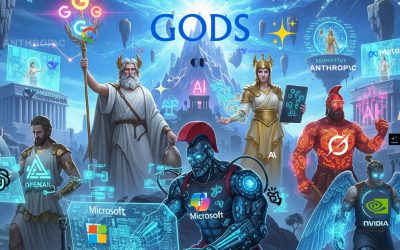
he new pantheon has arrived. In the electrifying arena of artificial intelligence, tech giants are the new "Gods of AI." This image captures the epic scale of the current AI landscape, with companies like Google (Gemini), OpenAI, Microsoft, and Nvidia vying for dominance. Who do you think will reign supreme in this modern Olympus? #GodsofAI #AI #ArtificialIntelligence #TechGiants #GoogleGemini #OpenAI #Microsoft #Nvidia #Meta #googluai

The Gods of AI

The Birth of Digital Olympus
In the annals of technological history, no revolution has been as swift or as profound as the rise of artificial intelligence. Like the ancient Greek pantheon, where gods ruled over distinct domains of human experience, today’s AI landscape is dominated by digital deities—companies and their visionary leaders who wield unprecedented power over the realms of text, image, video, and thought itself.

Read More
AI Processors and AI Chips are showcased in this image from Googlu AI, demonstrating various key players and their contributions to powering intelligent applications. The image features prominent logos and examples of AI processors and chips, including NVIDIA H100 GPUs, Intel Xeon, AMD Instinct Series, Google TPU Chips, Apple M-series Neural Engine, Cerebras, and Qualcomm AI Processors, all essential components in the "AI Processors and AI Chips" category.

AI Processors and AI Chips: Powering the Future of Intelligent Applications

AI Processors and AI Chips, The race for AI dominance is powered by specialized hardware. This image highlights the key players and their powerful AI processors and chips, from NVIDIA’s GPUs to Google’s TPUs, which are the engines behind the next generation of intelligent applications. #AI #ArtificialIntelligence #AIChips #AIProcessors #NVIDIA #GoogleAI #Intel #AMD #AppleSilicon #Tech #Innovation

Read More
Sam Altman, CEO of OpenAI, addresses a large, diverse audience with a world map visible behind him, alongside the text "SAM ALTMAN AI PIONEER A DEFINITIVE BIOGRAPHY" and the OpenAI logo

Sam Altman CEO of OpenAI AI Pioneer – A Definitive Biography

Sam Altman, CEO of OpenAI & AI Pioneer – A Definitive Biography. In the crucible of artificial intelligence, Sam Altman stands as the defining architect of humanity’s technological frontier. His journey—from a queer teenager in St. Louis to the steward of artificial general intelligence (AGI)—reveals a psychological evolution as complex as the systems he builds. This biography dissects Altman’s transformative leadership, the weight of existential responsibility, and his vision for 2035, where AI transcends tools to become societal infrastructure.

Read More